
Clean Gutters Still Overflowing? What a Contractor Should Check in Commerce City
Organize observations about gutter overflow and learn how to request a cause-focused contractor assessment in Commerce City without assuming replacement is necessary.
Start with the water path, not a replacement assumption
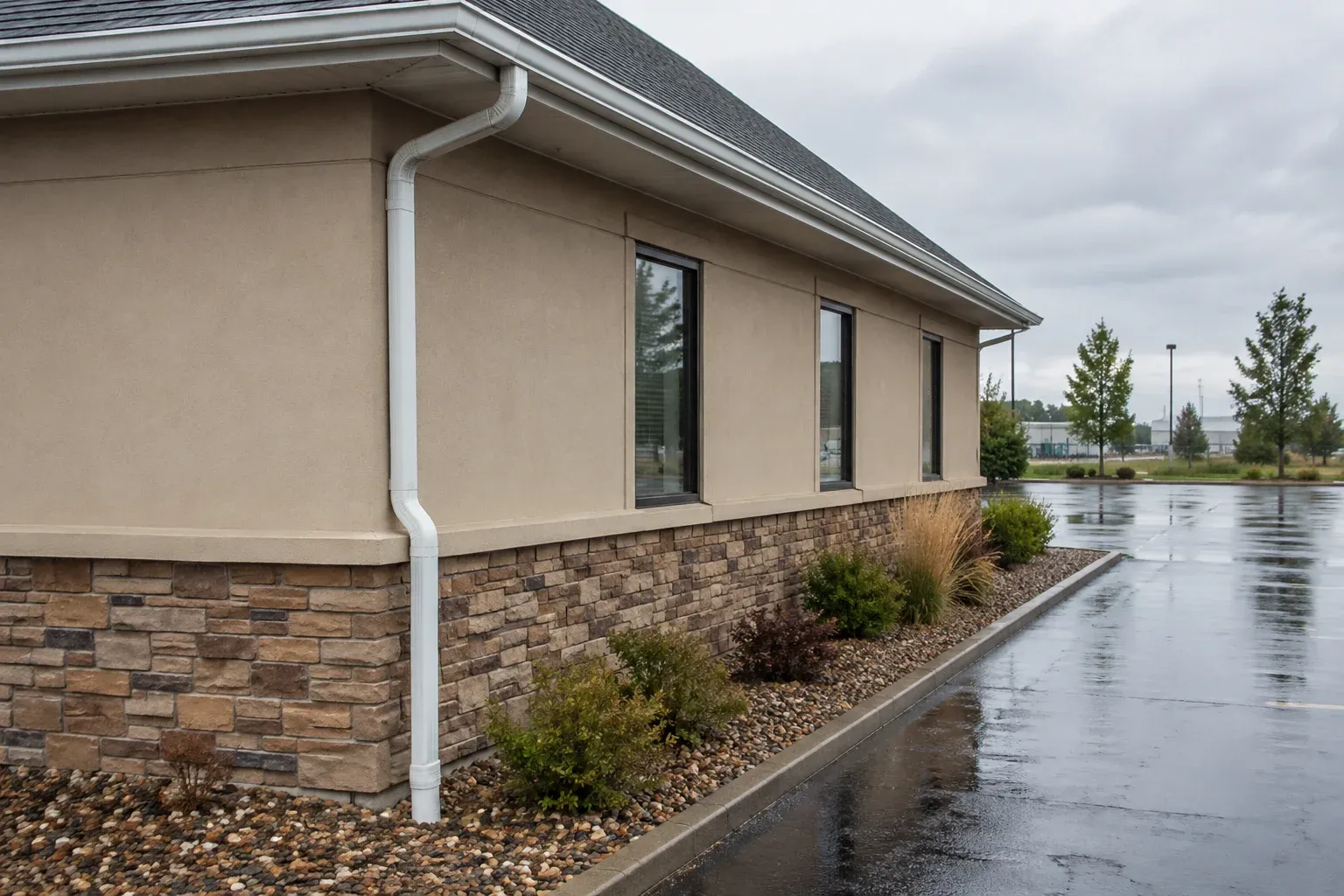
If clean gutters still overflow, a contractor assessment in Commerce City should look beyond whether leaves were removed. Water must enter the gutter, travel toward an outlet, pass through the downspout and discharge without backing up. A restriction or alignment problem anywhere along that route can produce similar symptoms, so another cleaning is not automatically the right next step.
For homeowners, rental managers, retail operators and warehouse owners, the useful question is what explains the observed failure. A sound assessment connects the location and timing of overflow to physical findings. That connection helps separate recurring debris from repair needs and gives you a basis for comparing recommendations without assuming the entire gutter system needs replacement.
Organize observations before requesting an assessment
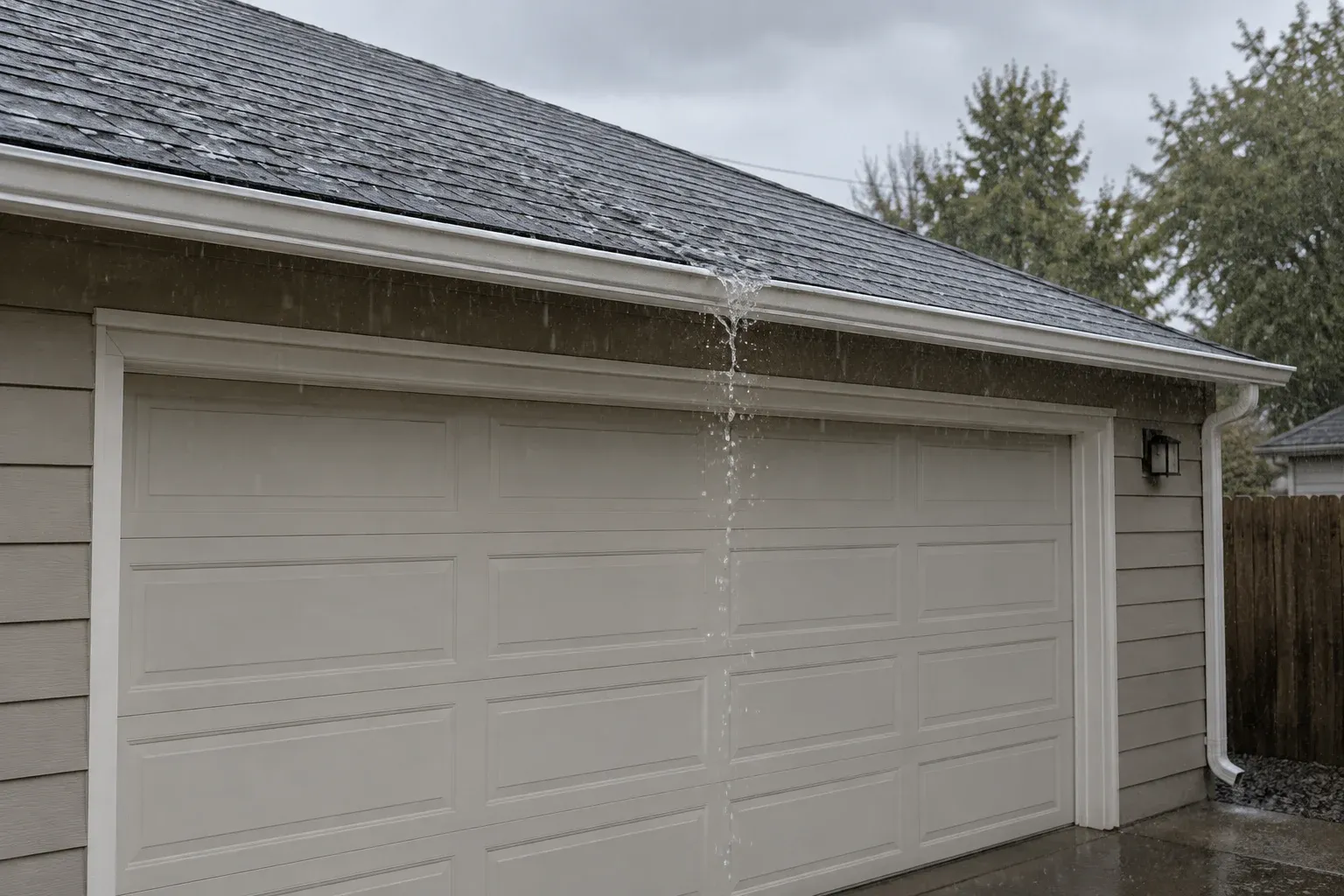
Observe from a sheltered, ground-level position when conditions are safe. Note whether water spills over the front lip, appears behind the gutter, escapes at a seam or shoots past the gutter without entering it. These are different patterns. Describe what you can see rather than labeling every drip as overflow, and avoid climbing ladders during rain or approaching electrical hazards.
Record whether the problem starts early in rainfall or only during a heavier burst. Include the affected building side, nearby corners and the closest downspout. On commercial properties, identify loading areas, customer entrances or tenant spaces below the spill. A short video from a safe location can preserve a pattern that is difficult to reproduce during a dry-weather visit.
Keep observations separate from assumptions in your notes. “Water spilled above the west entrance ten minutes into rainfall” is more useful than “the downspout is blocked” when the blockage has not been confirmed. If several tenants report problems, label each report by location and date so separate failures are not mistakenly treated as one continuous gutter problem.
- Record the cleaning date and when overflow first returned.
- Mark the affected run on a simple building sketch.
- Note the rain intensity and where water leaves the gutter.
- Identify entrances, walkways or stored materials exposed below.
Separate recurring debris from an incomplete flow path
A recently cleaned trough can still have a restricted outlet or downspout elbow. Fine roof granules, small twigs and compacted material may remain where the gutter narrows into the outlet. Fresh windblown material can also collect after cleaning. The relevant distinction is whether the original flow path was fully cleared or whether a new accumulation developed afterward.
Ask which portions of the system were included in the earlier cleaning and whether discharge was observed. A clear-looking gutter alone does not establish that the downspout is open. The guide to signs your downspouts may be causing water problems provides related context, but the assessment still needs to establish what is happening at your building rather than infer a blockage from appearance.
Check alignment and runoff capture as separate issues
When overflow repeatedly occurs away from an outlet, alignment deserves attention. A sagging section can hold water instead of moving it toward the downspout. Loose supports, distorted gutter profiles or changes at the mounting surface may contribute. A contractor should distinguish a localized low point from a broader slope problem before recommending that an entire run be repositioned.
Roof runoff can also miss the gutter rather than fill it. Water passing behind the back edge or overshooting the front calls for attention to the roof-to-gutter relationship. Those patterns do not prove inadequate gutter capacity. Ask for findings that distinguish water entering and backing up from water never being captured, because the appropriate correction may be quite different.
Trace outlet and downspout restrictions to the discharge point
At each outlet, the assessment should consider the opening, its connection to the downspout and the condition of the elbows below. A crushed section or obstruction can limit flow even when most of the vertical pipe is clear. Conversely, visible water leaving the bottom only confirms some passage; it does not rule out a partial restriction under heavier runoff.
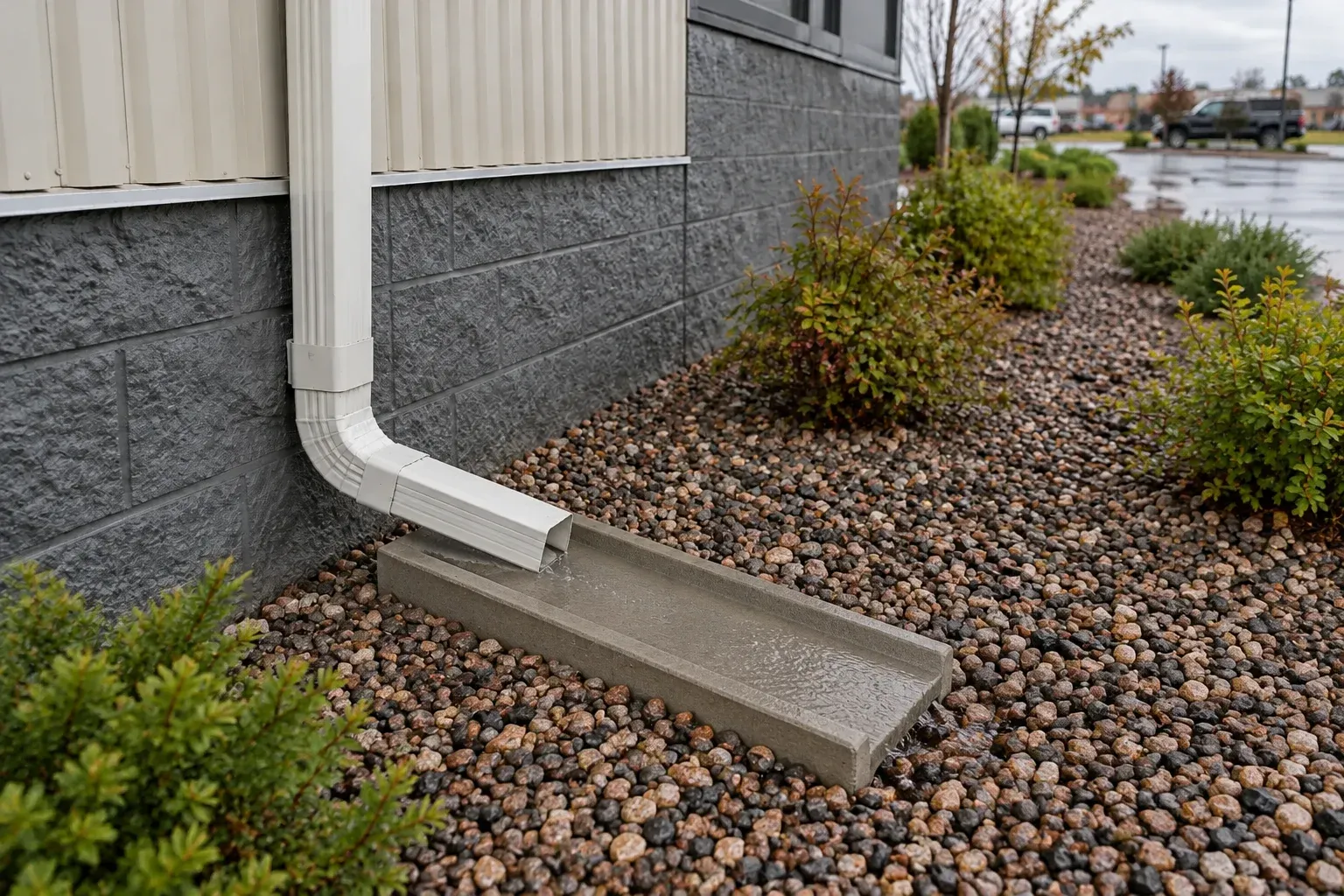
Follow the route beyond the visible downspout. Extensions and underground connections can restrict discharge and cause water to back up upstream. If a pipe disappears below grade, ask where it terminates and whether that downstream route has been evaluated. The article on clogged underground downspout drains explains why a clean gutter does not necessarily mean the complete drainage route is functioning.
Evaluate capacity only after identifying other limitations
Overflow limited to intense rainfall may justify evaluating capacity, but rain intensity alone is not a diagnosis. Roof area feeding the run, concentrated valley flow, gutter geometry, outlet placement and downspout configuration all influence performance. Clearing restrictions and checking alignment first helps avoid recommending larger components for a problem that a targeted correction could resolve.
For a shop, office or industrial building, distinguish roof sections served by exterior gutters from areas using other drainage arrangements. Do not assume one overflowing corner represents the entire property. Ask which roof area feeds the affected run and what evidence supports any proposed size or outlet change. A recommendation should explain the limitation it is intended to address.
Connect each proposed repair to a documented finding
Request a written scope that identifies the affected location, observed condition, suspected cause and proposed correction. If more than one cause remains plausible, ask what additional assessment would distinguish them. Photos can support a finding, but they should be accompanied by an explanation of how the condition interferes with flow rather than simply showing an aging component.
A useful scope also defines boundaries: which gutter sections, outlets, downspouts or drain connections are included, and which are excluded. Ask how the work will be checked and what limitations remain if natural rainfall is not available. A controlled flow check can provide useful evidence, but it does not reproduce every storm or establish performance under every possible rainfall intensity.
For occupied business premises, clarify access arrangements before work is agreed. Ask whether the proposed work affects entrances, delivery routes or parking, and who will coordinate any necessary restrictions. These practical details do not establish the cause of overflow, but they help make competing scopes comparable and prevent a narrowly described repair from leaving important site requirements unresolved.
Make the next contractor visit a cause-focused conversation
When seeking a contractor in Commerce City, share your observations and ask whether the provider offers an assessment of the affected water path. Confirm access needs, assessment scope and work boundaries directly. Explain what the earlier cleaning included, identify any concealed drain connections and ask which questions can be answered during the visit versus which may require separate investigation.
The goal is not replacement by default or repeated cleaning without an explanation. It is a defensible connection between the symptom, the cause and the proposed work. For property owners seeking a contractor in Commerce City, that approach supports clearer decisions about localized repairs, further drainage investigation or capacity changes when the findings actually justify them.
Frequently asked questions
Does overflow after cleaning mean the gutters need replacement?
No. A remaining obstruction, restricted outlet, low section or damaged downspout may explain the problem. Replacement should be supported by findings about condition or capacity, not by overflow alone.
What information should I give a contractor before an assessment?
Provide the cleaning date, overflow location, approximate rain intensity and whether water spills over the front, travels behind the gutter or escapes at a joint. Ground-level photographs and information about buried drain connections can also help.
Can a ground-level observation confirm that a downspout is clear?
No. Visible discharge shows that some water is passing through, but a partial restriction may remain. Further assessment of the outlet, elbows and downstream connection may be needed to distinguish an obstruction from another cause.