
Drainage Service in Commerce City: Gutter Clog or Downspout Backup?
Follow roof runoff from gutter to discharge point, and learn which observations help distinguish a gutter clog from a downstream drainage problem.
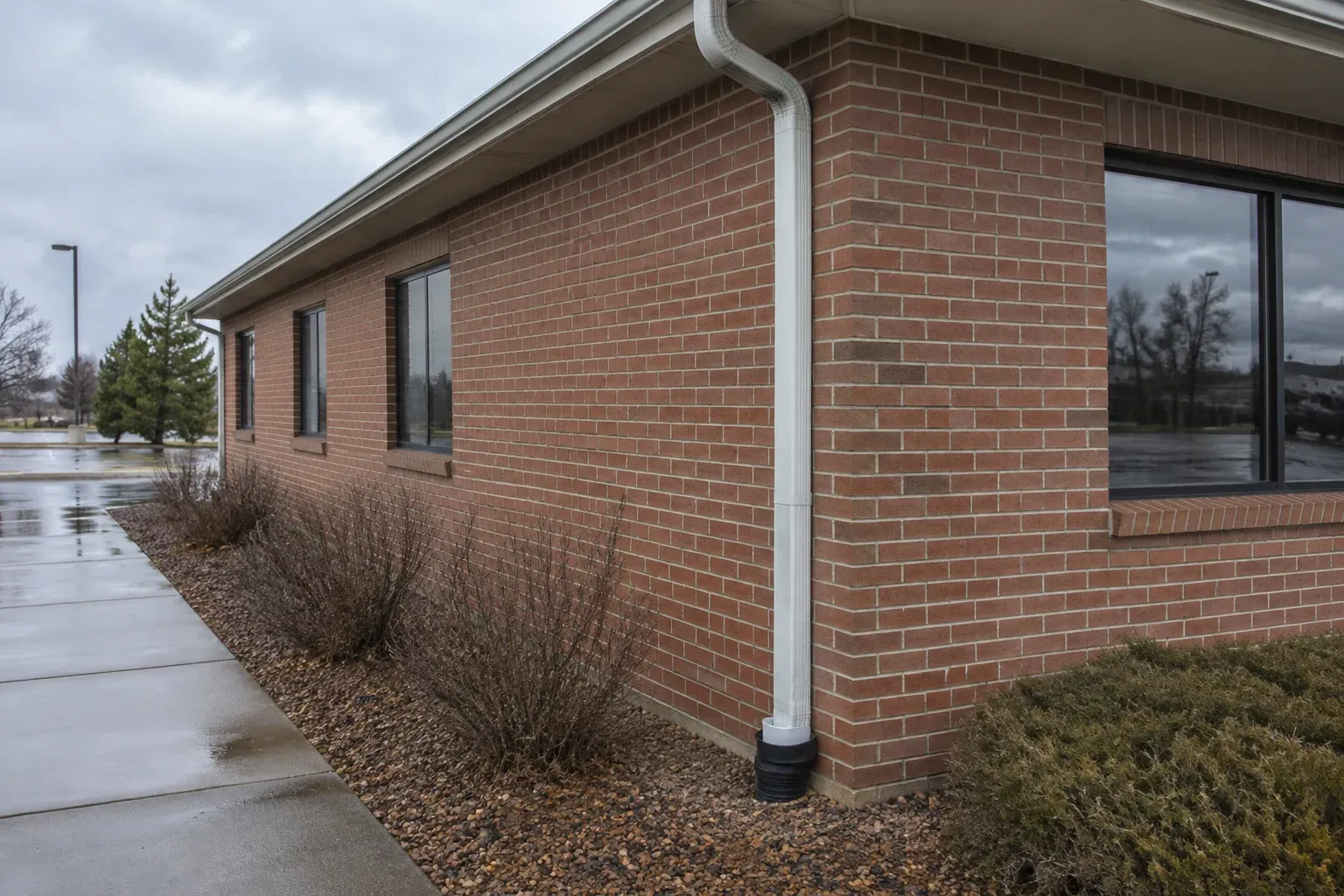
An overflowing gutter does not identify the blockage
When water spills over a gutter, the obvious suspect is a clog along the roof edge. But for property owners requesting drainage service in Commerce City, the more useful question is where runoff stops moving freely. A restriction at a downspout’s underground connection can produce symptoms that resemble a gutter problem. Cleaning the visible trough may not resolve a backup farther along the route.
The same distinction matters at a house, apartment building, retail storefront or warehouse with exterior gutters. Water beside the wall can affect landscaping, entrances and pedestrian routes regardless of building use. Start by describing what you can see from a safe ground-level position. An accurate account of the overflow location and timing is more useful than deciding in advance that the property needs replacement gutters or a new buried drain.
Trace the complete water path
Roof runoff first enters the gutter, travels toward an outlet and drops into the downspout. Elbows carry it around roof overhangs or other offsets. At ground level, the downspout may discharge openly or enter an adapter connected to buried piping. That pipe then carries water toward its intended destination, such as a visible outlet or another drainage feature. Do not assume where an underground line ends simply from the direction it enters the soil.
A restriction can occur at any of these transitions. If downstream piping cannot accept incoming water, water may rise in the connected downspout. It can escape at an open adapter or loose joint before reaching the gutter; in other arrangements, backup can rise farther. Conversely, a blocked gutter outlet can cause roof-edge overflow while the underground drain remains clear. The visible spill point is therefore a clue, not necessarily the location of the underlying problem.
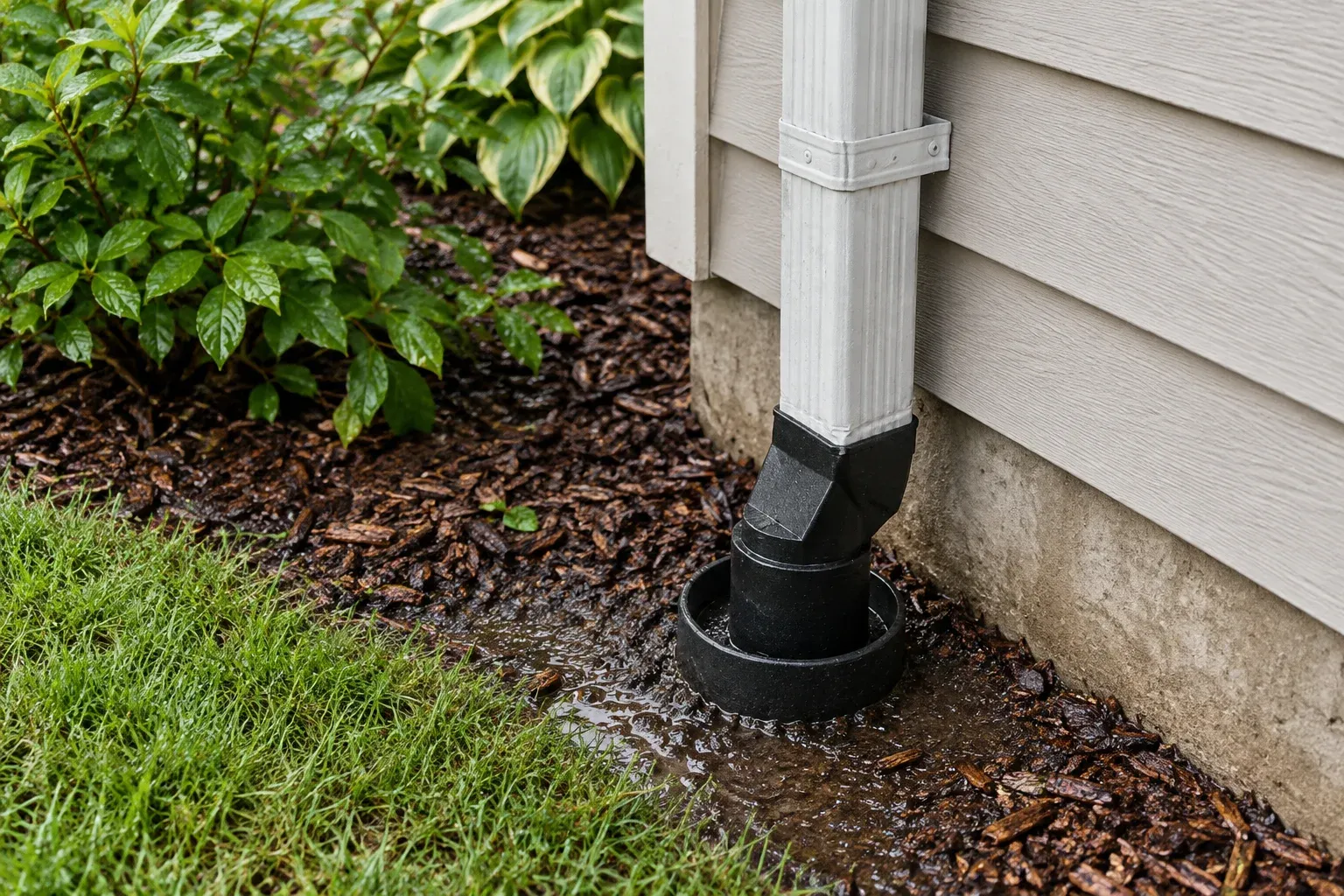
Separate roof-edge symptoms from downspout restrictions
From the ground, note whether overflow occurs along a broad stretch of gutter or concentrates near one outlet. Visible vegetation, accumulated debris or a sagging section can support an above-ground explanation, but a clear-looking gutter does not rule out an obstructed outlet. Water that shoots past the gutter during intense runoff is also different from water that collects inside it and spills over the front. Describe that difference when arranging an assessment.
Look along the accessible downspout for crushed sections, displaced elbows or water escaping at seams. A damaged bend can restrict flow without an underground problem. If the gutter was recently cleaned, report whether the downspout and buried connection were also checked rather than assuming they were included. For related warning signs, the article on downspouts as a cause of water problems provides another way to organize observations without treating every symptom as a gutter defect.
Read the clues at the underground connection
At the base of the downspout, look for water emerging around the adapter, fresh sediment on nearby paving or a wet patch that appears during roof runoff. These observations can justify checking the connection and downstream piping. They do not prove that the entire buried line is blocked. A poor fit, damaged fitting, restricted transition or surface water collecting beside the connection can create similar appearances.
Timing helps narrow the description. Does water appear around the adapter almost immediately, or only after several minutes of rain? Does one connected downspout overflow while others remain quiet? Does the wet area persist after roof runoff stops? Record these details without pulling apart fittings, opening unfamiliar drainage structures or pushing a hose into the line. Introducing additional water into an already backed-up system can worsen pooling and still fail to identify the cause.
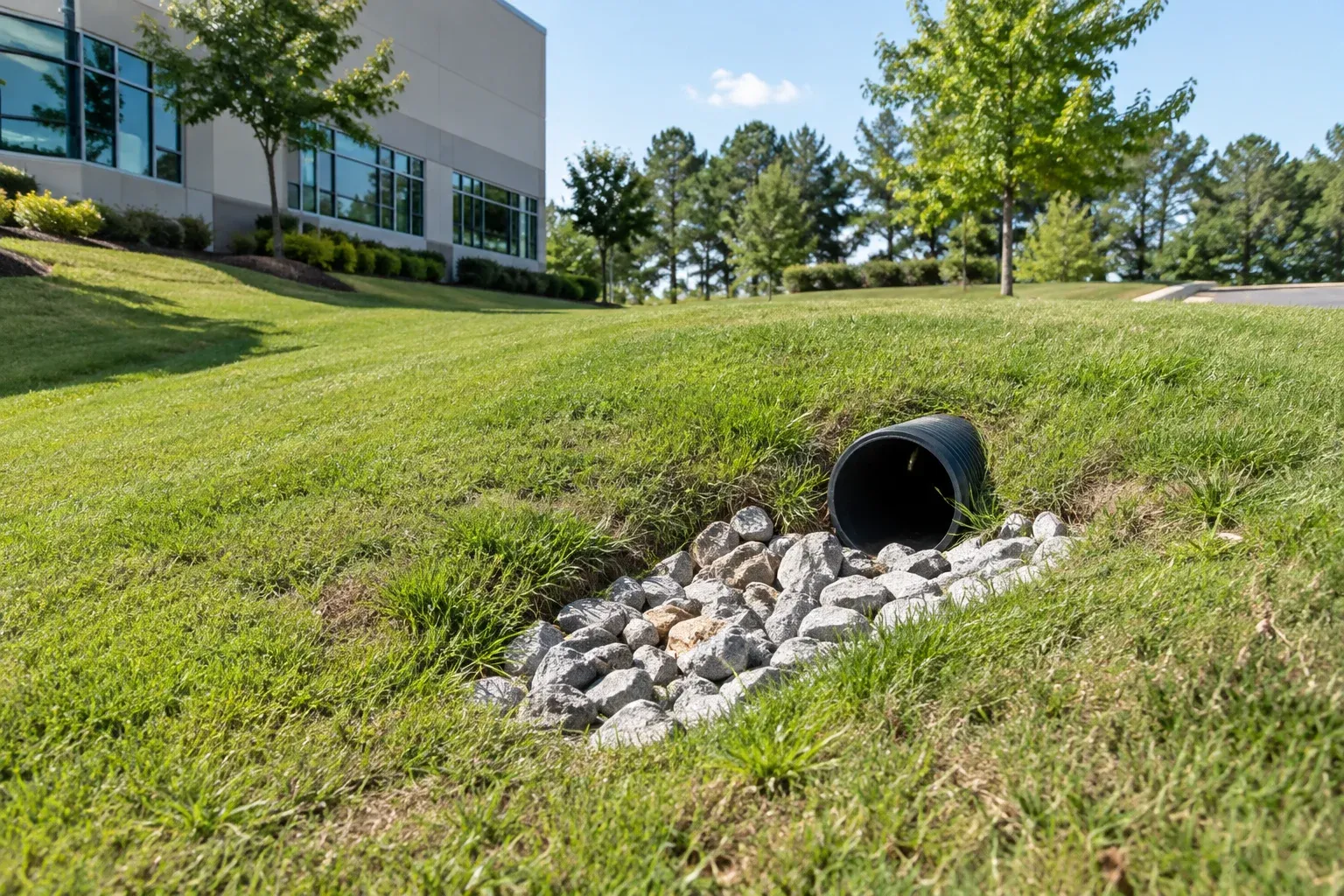
Check the discharge point without guessing its route
If you know where the drain discharges and can reach it safely, observe the area without dismantling anything. A visible outlet may be covered by vegetation, sediment or ice, or sit in standing water that limits discharge. A pipe that appears open at its end can still have a restriction upstream. Likewise, little visible flow does not establish a blockage unless the outlet actually serves the downspout being observed.
Some gutter-fed drains have no readily visible outlet. Property drawings or maintenance records may help establish the route, especially at multifamily, retail and industrial properties with several roof drainage zones. Tell the provider when the destination is unknown. Water pooling near a foundation can also involve grading or other surface runoff, so keep that possibility distinct from the downspout connection. The related discussion of pooling near foundations despite working gutters covers that broader symptom.
Prepare a clear drainage service request
A useful service request identifies the building, affected downspout and exact place where water first becomes visible. Photos taken safely after rainfall can show staining, sediment and nearby access constraints. Video from a sheltered location may show the sequence during rain, but do not stand beneath overflowing roof edges or enter flooded areas to capture it. Commercial managers should identify affected entrances, loading areas and tenant access routes as well as the drainage symptom.
Ask a qualified provider how the suspected restriction would be located and what findings would support cleaning, a connection repair or further investigation. Depending on access and pipe condition, assessment may involve inspecting reachable components, controlled flow checks or a camera inspection where suitable. These are possible diagnostic approaches, not procedures every property requires. A recommendation to excavate or replace components should explain the observed defect and why a more limited correction would not address it.
- Identify the affected downspout by building side, entrance or another fixed landmark.
- Describe whether water escapes at the gutter, a downspout joint, the adapter or the discharge area.
- Report rainfall timing, recent cleaning and any known drain routing.
- Mention pooling that affects entrances, walkways, tenant spaces or loading operations.
Match the correction to the identified problem
The goal is to restore a continuous runoff path, not replace whichever component is most visible. A localized obstruction, damaged elbow, failed connection and restricted discharge point call for different responses. More than one defect can exist, so correcting a gutter issue does not automatically establish that the underground route works.
When requesting drainage service in Commerce City from a qualified provider, describe the full path and the point where normal flow appears to change. Share what you observed, acknowledge what remains hidden and ask for recommendations tied to findings. That approach keeps the decision focused on the actual drainage problem rather than assuming every overflow requires new gutters or a new underground drain.
Frequently asked questions
Can an underground downspout drain make a gutter overflow?
It can, if a downstream restriction causes water to back up through a connected downspout far enough to reach the gutter. Water may instead escape first at a loose joint or open adapter. Overflow alone does not establish where the restriction is.
Does water around the downspout adapter prove the buried pipe is clogged?
No. A downstream blockage is one possibility, but a damaged adapter, a restricted transition, surrounding surface runoff or an overwhelmed discharge point can produce similar signs. The connection and downstream route need to be assessed together.
Should I replace the gutters before requesting drainage service?
Not solely because of an overflow. First identify whether the problem involves the gutter outlet, downspout, buried connection or discharge point. Replacement is appropriate only when the condition or capacity of the relevant component supports that decision.