
How to Tell if Your Contractor in Denver Should Address Gutters Overflowing Because the Downspouts Are Too Small for Your Roof Area
What You'll Learn
- Spot signs that overflow is caused by undersized downspouts
- Understand how roof area changes gutter drainage demand
- Learn when cleaning will not solve recurring overflow
- Know when a contractor in Denver should inspect and upgrade
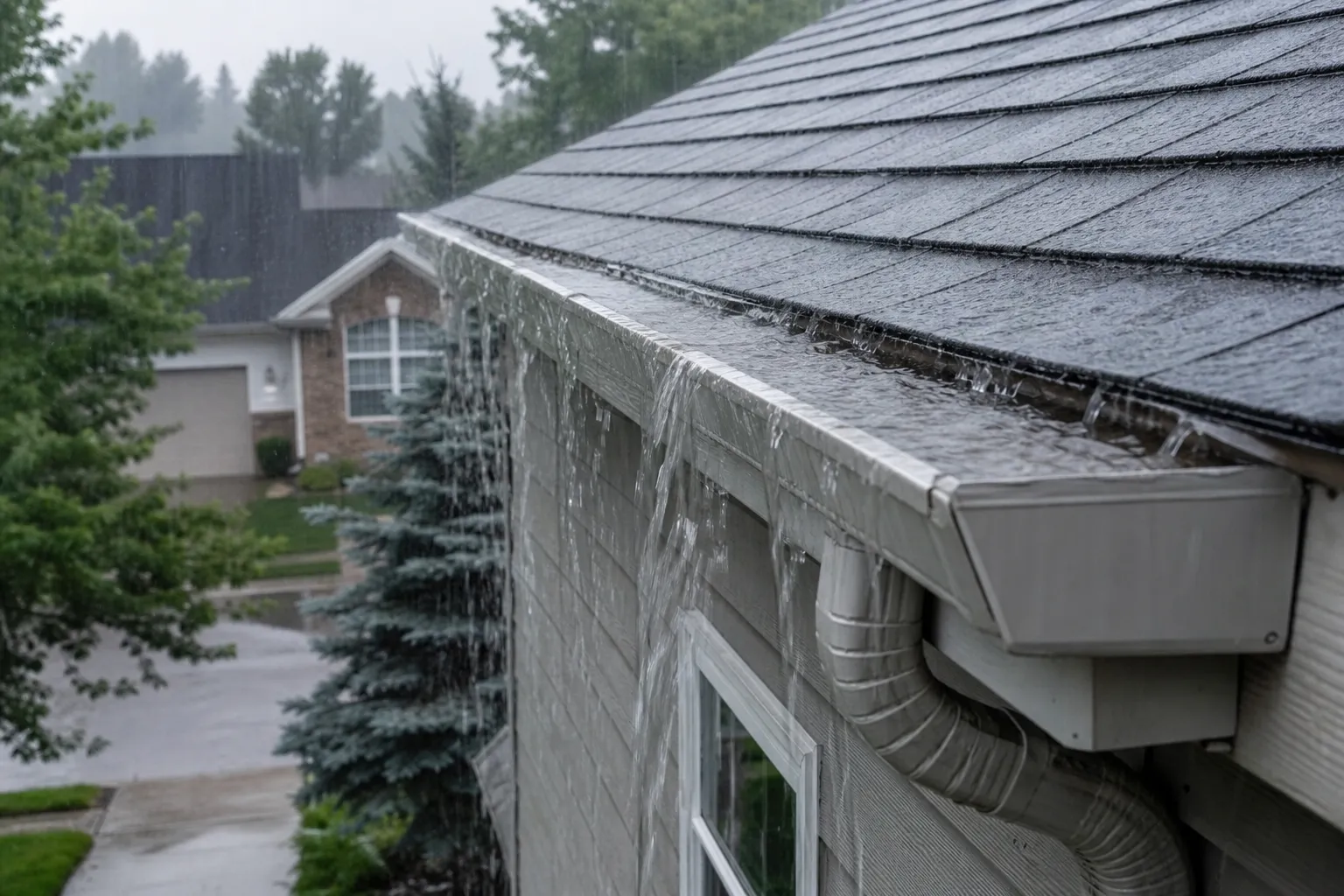
If your gutters spill over during heavy rain, the problem is not always leaves or debris. In many cases, a contractor in Denver may find that the real issue is downspouts that simply cannot move water fast enough for the size and layout of the roof above them. For homeowners and property managers, knowing the difference matters. A blockage can often be cleared, but undersized drainage components can keep causing overflow, fascia staining, foundation moisture, and slippery walkways until the system is properly evaluated and corrected.
This is especially important in Denver, where intense storms can dump a large volume of water in a short period. A qualified contractor looks beyond the obvious and asks whether the gutter system has enough drainage capacity for the roof area feeding it. If your overflow keeps returning after cleaning, or if only certain runs fail during downpours, the issue may be sizing rather than maintenance.
Why downspout size matters more than many owners realize
Gutters do not work alone. They collect runoff, but downspouts are what actually carry that water down and away. When downspouts are too small, too few, or poorly located, water backs up inside the gutter trough faster than it can exit. That backup can look exactly like a clog at first glance. However, if the gutter is relatively clean and still spills over during moderate to heavy rain, a contractor in Denver should consider whether the drainage system is undersized for the roof plane it serves.
This issue often shows up on larger roof sections, long gutter runs, or roof areas that funnel water into one concentrated point. If you want context on how overall drainage capacity affects performance, review this guide on gutters that are undersized for today’s roof runoff. The same logic applies when the gutter itself seems adequate but the downspouts cannot keep up.
Visible signs the overflow is caused by undersized downspouts
- Overflow happens mainly during heavier rain, not all the time
- The gutter looks clean, but water still spills over the front edge
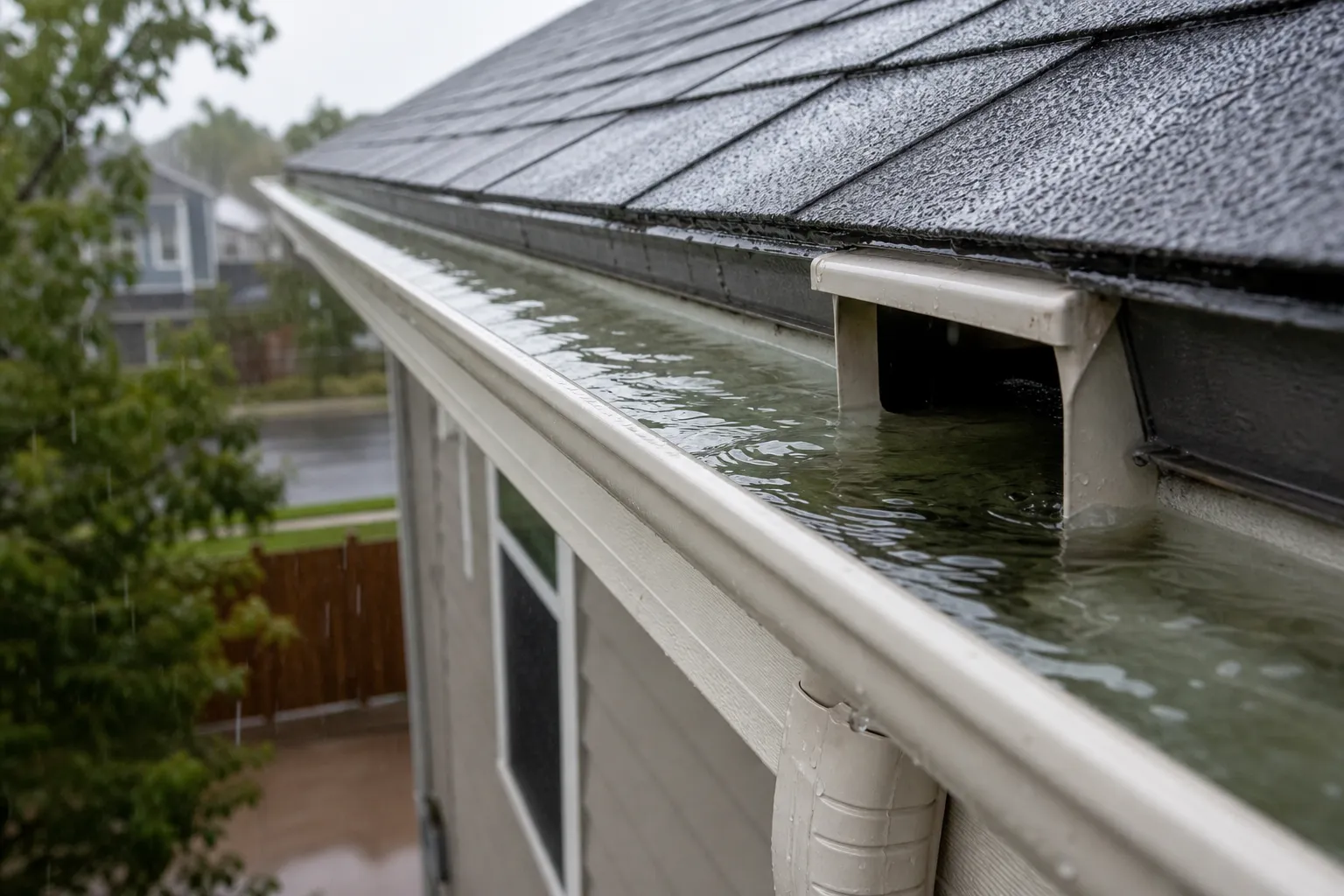
- Water pools near the top of the downspout opening before overflowing
- One section fails repeatedly while other gutter runs perform normally
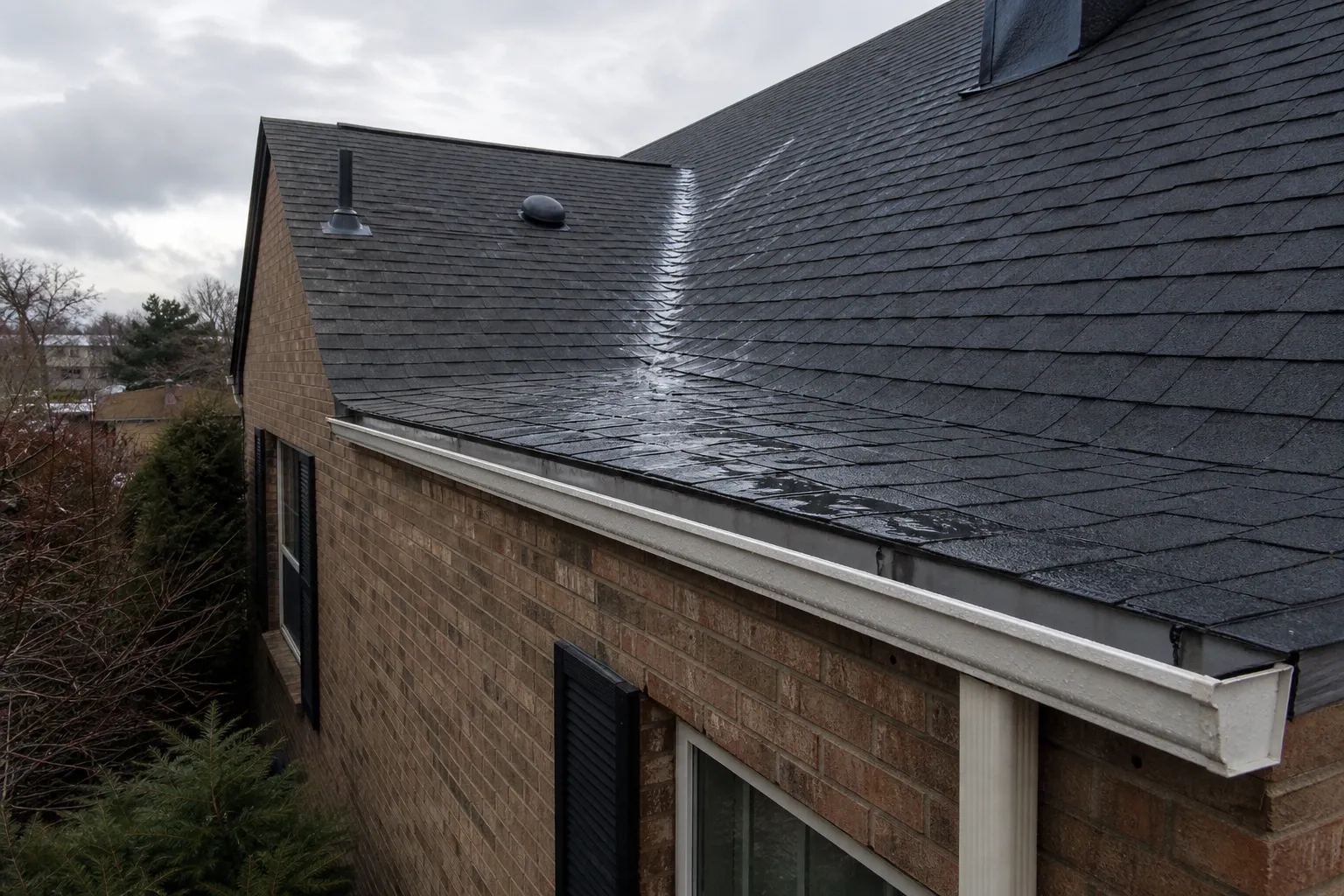
- Overflow appears near roof valleys or large roof sections that dump water quickly
- You have already cleaned the system, but the same problem returns
One of the clearest warning signs is water rising and churning near the downspout outlet during a storm. That can mean the opening or the downspout below it is not moving runoff out fast enough. A contractor may also notice that overflow is concentrated where roof valleys discharge large volumes into a short stretch of gutter. Similar drainage symptoms can happen when roof water is not entering the gutter properly, which is why some owners also compare their conditions with this article on poor roof-to-gutter alignment or this explanation of gutter apron and drip edge problems.
How roof area and runoff volume affect drainage capacity
The larger the roof area draining into a gutter run, the more water that system must handle during a storm. But square footage alone is not the whole story. Roof pitch, valley placement, the length of the gutter run, and how many downspouts serve that section all influence performance. A steep roof can shed water more quickly. A valley can concentrate runoff from multiple roof planes into one narrow area. In those conditions, even a clean gutter may overflow if the downspout capacity is too limited.
That is why a professional contractor in Denver should evaluate the roof and drainage system together rather than treating gutter overflow as a simple cleaning issue. Water behavior tells a story. If runoff is backing up at the outlet, shooting over the front edge near concentrated roof drainage, or creating repeated splash zones below, the sizing and placement of the downspouts may need to change.
When it is probably debris buildup instead
Debris-related overflow usually leaves different clues. You may see plants growing from the gutter, standing water that remains long after rain, obvious leaf mats at the top of the downspout opening, or overflow occurring even in lighter showers. Water may also spill at random points along the run rather than at the highest-demand locations. In those cases, cleaning and maintenance may solve the issue. But if the gutter is open and water still cannot evacuate quickly enough, a contractor should investigate sizing.
It is also worth noting that more than one problem can exist at the same time. A slightly undersized system may seem acceptable in dry weather, then fail badly once minor debris narrows flow even further. Related warning signs can include water collecting near pavement edges, as covered in this post about drainage problems near a garage slab and driveway edge, or moisture effects on trim and roof-edge materials similar to these fascia staining and rot indicators.
What a contractor should evaluate on site
A thorough evaluation should include more than a quick look inside the gutter. A skilled contractor in Denver should inspect the roof area feeding each run, the number and size of downspouts, outlet placement, slope, signs of overflow patterns, and whether water is escaping behind or around the system. The goal is to determine whether the existing setup can handle expected runoff without repeated spillover.
- Measure or estimate the roof area draining to each gutter section
- Identify valleys and concentrated discharge points
- Check whether downspout outlets are too few or too small
- Look for recurring overflow marks on siding, fascia, or soil below
- Confirm whether the problem is capacity, blockage, alignment, or a combination
That broader inspection matters because overflow can also be aggravated by surrounding conditions. For example, hidden moisture around trim lines may resemble issues discussed in this guide to soffit and fascia conditions behind gutter problems. The right diagnosis helps prevent spending money on repeated cleanings when the real solution is a capacity upgrade.
When upgrades make more sense than repeated maintenance
If your gutter system overflows year after year despite cleaning, repairs, and routine attention, it may be time for a permanent correction. A contractor may recommend adding additional downspouts, increasing downspout size, revising outlet locations, or improving how runoff is distributed along the gutter run. The exact recommendation depends on how much roof area drains to that section and where the water concentrates during storms.
For property owners in Denver, that kind of upgrade can protect siding, fascia, walkways, and the areas surrounding the building from repeated water exposure. It can also reduce the chance that heavy runoff will overwhelm one corner of the property while the rest of the system appears fine. The key is getting an evaluation from a contractor in Denver who understands the relationship between roof geometry and drainage capacity.
Conclusion
When gutters overflow, debris is only one possible cause. If the system is relatively clean but still spills during storms, the issue may be downspouts that are too small or too limited for the roof area they serve. A knowledgeable contractor in Denver can identify the warning signs, evaluate runoff demands, and recommend whether targeted upgrades are needed. For homeowners and business owners in Denver, working with the right contractor can turn a recurring overflow problem into a properly managed drainage system.
Source: EPA guidance on managing stormwater runoff
Frequently Asked Questions
Uziel leads Kings Exteriors & Gutter Systems LLC with a practical, customer-focused approach rooted in protecting homes and keeping properties looking their best. He was drawn to exterior work because it combines problem-solving, craftsmanship, and the chance to make a visible difference for homeowners. From gutters and drainage to roofing, siding, and painting, he values work that helps prevent damage, improve function, and add lasting curb appeal. Uziel believes customers deserve clear communication, dependable service, and attention to detail from start to finish. He brings a hands-on mindset to every project and takes pride in treating each property with care, respect, and the same level of attention he would want for his own.
- 7+ years in exterior and gutter services
- Roofing Certified
- OSHA Certified
- Specialized in gutter service and gutter cleaning
- Experienced in roofing, siding, and painting services