
How to Tell if Your Drainage Service Gutters Are Sending Water Behind the Fascia Because the Back Pitch Is Wrong in Northglenn Homes
What You'll Learn
- Spot early signs of water running behind gutters
- Understand how back pitch damages fascia and soffits
- Know when adjustment, repair, or replacement makes sense
- Learn what a professional drainage service inspection checks
When gutters look intact from the ground, it is easy to assume they are doing their job. But in Northglenn, a subtle installation or settling issue can make water run behind the gutter instead of into it. For property owners trying to protect trim, siding, and roof edges, a professional drainage service evaluation is often the fastest way to confirm whether the problem is incorrect back pitch, loose attachment, or a larger drainage defect. If you have noticed staining, peeling paint, or damp soffits after rain, your gutter system may be directing water exactly where it should not go.
What backward gutter pitch actually means
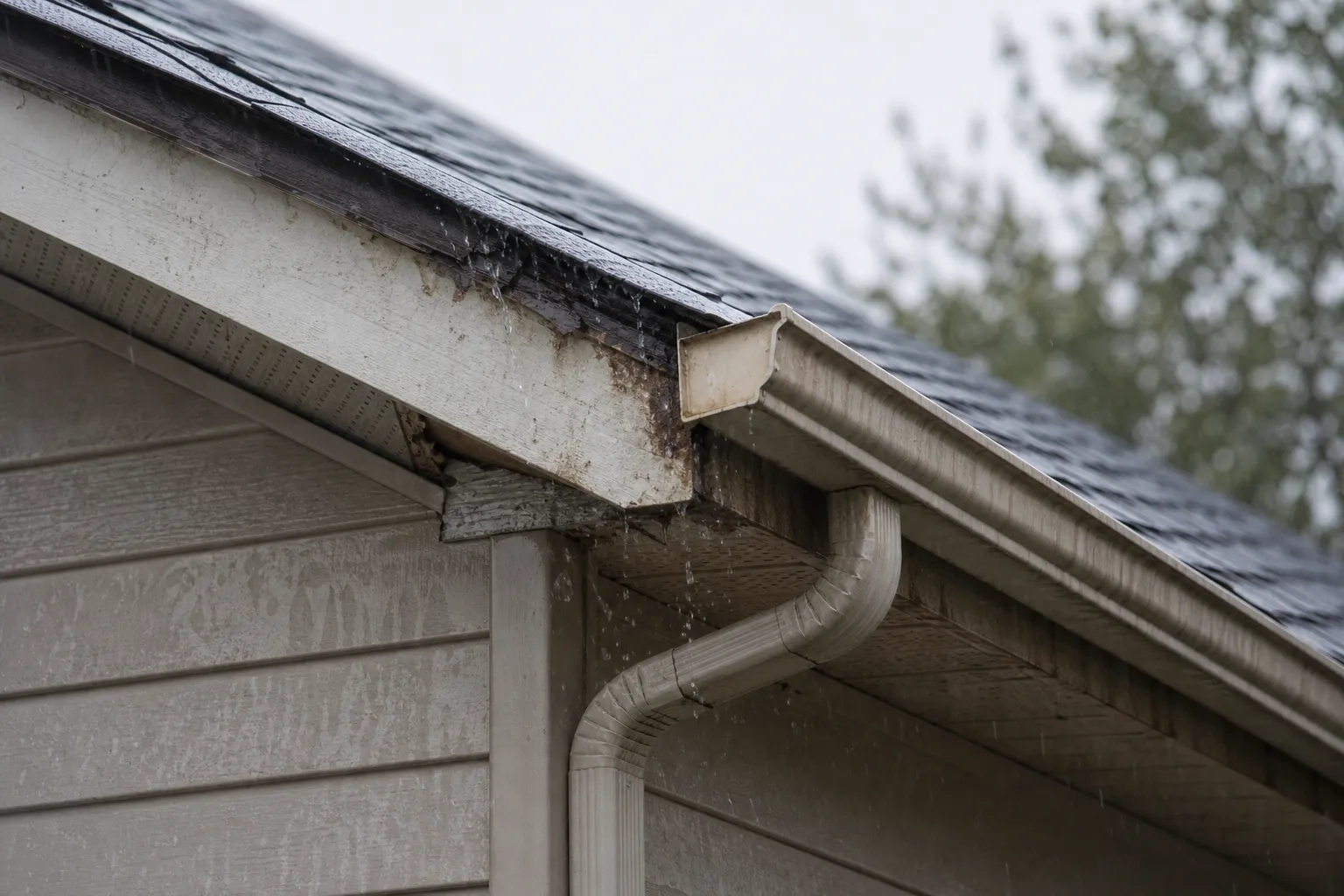
Most homeowners think about gutter slope only in terms of whether water moves toward the downspout. That matters, but there is another angle that can create serious trouble: the pitch from the front edge of the gutter to the back edge near the fascia. When the back side sits too low, or when the gutter has rotated outward or inward over time, rainwater can hug the roof edge and slip behind the system. Instead of being captured in the trough, it runs down the fascia board, wets the soffit, and may continue onto siding or into concealed framing. In a Northglenn drainage service inspection, this issue is often identified by water marks in places the gutter was supposed to protect.
This kind of failure can be easy to confuse with other drainage problems. For example, standing water from poor slope toward the outlet creates one set of symptoms, while discharge issues at ground level create another. If you are comparing possibilities, it may help to read our article on how improper gutter slope can leave standing water and shorten system life. You can also review our guide on signs a downspout outlet may be crushed or disconnected underground, since drainage symptoms sometimes overlap even when the root cause is different.
Warning signs at the fascia, soffits, paint, and siding
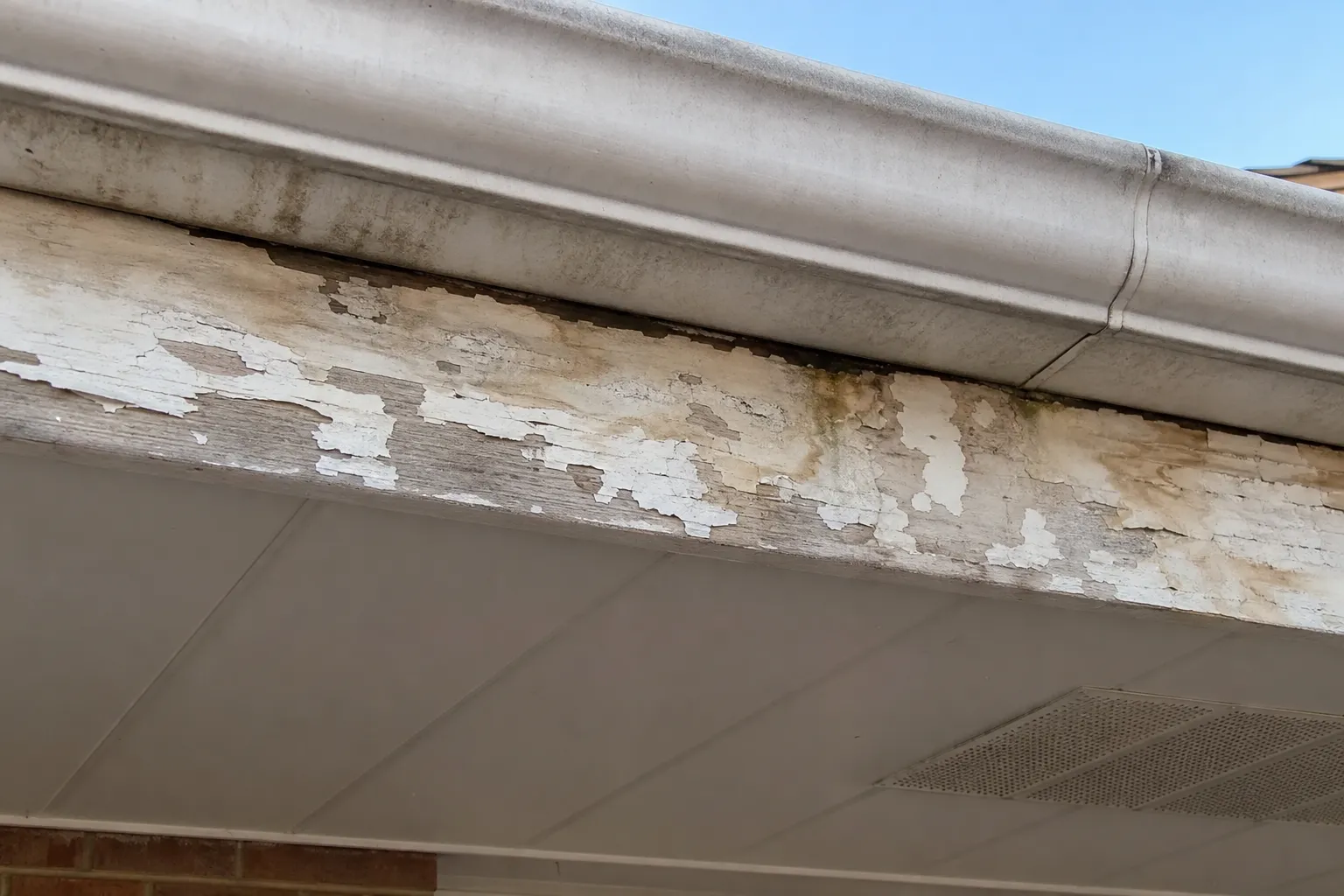
- Peeling or blistering paint along the fascia line
- Dark streaks or water stains on soffit panels
- Warped wood, soft trim, or swollen fascia boards
- Vertical staining or algae on siding below the gutter
- Dripping behind the gutter during moderate rain
- Ice formation near the roof edge after wet weather
These signs matter because water behind the gutter often stays hidden until cosmetic damage appears. Paint failure is one of the earliest clues. When water repeatedly reaches the fascia, coatings lose adhesion and begin to bubble, crack, or peel. Soffits may develop dark lines or mildew-like discoloration, especially where runoff follows the same path storm after storm. In more advanced cases, the trim becomes soft or distorted. A qualified drainage service provider in Northglenn will not stop at the visible damage; the inspection should also determine why the water is escaping the gutter in the first place.
Siding can also reveal the pattern. If runoff is bypassing the gutter back edge, you may see narrow, repeated wash marks below the eave or concentrated staining near seams and corners. In some homes, owners first suspect splash-back at grade, only to learn the water is starting much higher. Related drainage clues can show up elsewhere around the property too. Our article on failing splash blocks or downspout extensions after heavy rain explains what happens when roof runoff is not controlled after it leaves the gutter, while our post on overflowing gutters and porch or entryway water problems shows how drainage issues can spread beyond the roof edge.
Why this problem develops
Backward pitch is not always the result of the original installation alone. Over time, fasteners can loosen, hangers can shift, and sections can rotate enough to change how water enters the trough. Debris buildup can add weight, and repeated wet-dry cycles can gradually alter alignment. In some cases, the gutter profile itself is no longer stable. If that sounds familiar, our guide on gutter hangers loosening after seasonal expansion and contraction offers useful context on attachment-related movement. Debris can also contribute to hidden roof-edge trouble, as covered in our article about wind-blown debris causing concealed gutter and roof edge problems.
How a professional drainage service inspection confirms the cause
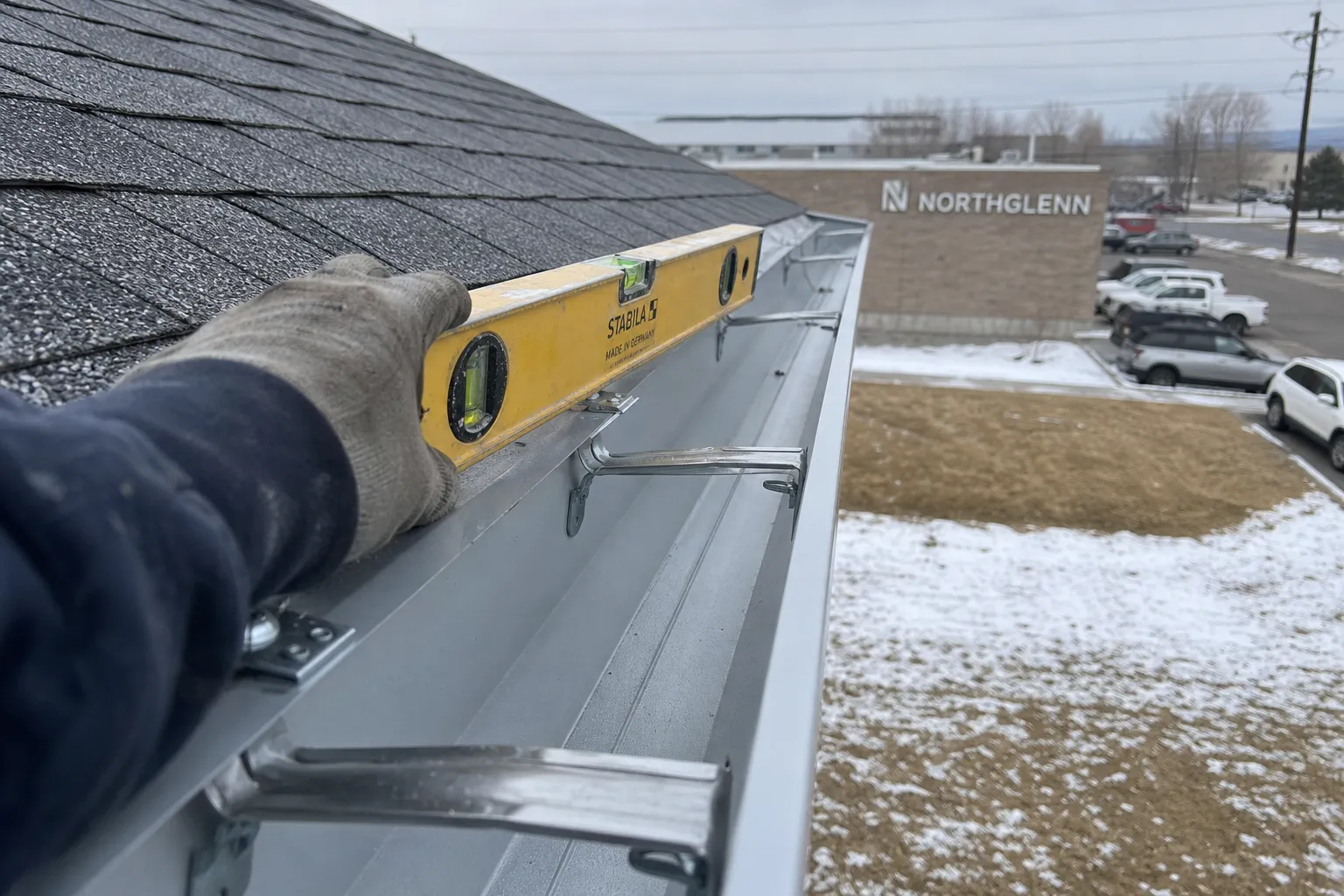
A thorough drainage service inspection in Northglenn should evaluate more than whether the gutter appears level from the lawn. The contractor should check the relationship between the roof edge and the back of the gutter, inspect hanger spacing and attachment strength, look for signs of gutter rotation, and identify staining patterns that show the path of escaped water. They may also test how water enters the gutter during flow, especially near seams, corners, and high-volume roof sections. The goal is to separate back-pitch problems from other causes such as clogs, undersized sections, or outlet restrictions.
This diagnosis matters because the right fix depends on the actual mechanism of failure. A minor alignment issue may be corrected by resetting or re-securing the section. A damaged or distorted run may need targeted repair. If the system has widespread deformation, chronic attachment failure, or fascia deterioration affecting secure mounting, replacement may be the more durable option. At ground level, the inspector may also note where runoff is ending up, because roof-edge failures often combine with discharge issues. For example, our article on overflowing gutters causing soil erosion around side yards and equipment pads helps explain how unmanaged roof water can create secondary property damage.
When adjustment is enough and when replacement is smarter
- Adjustment may work if the gutter is structurally sound and only slightly out of position.
- Repair is often appropriate when isolated hangers, seams, or short sections have failed.
- Replacement may be the better choice when multiple runs are warped, loose, or no longer mount securely.
Homeowners and business owners often hope the answer is a quick tweak, and sometimes it is. If the gutter body is still in good condition and the fascia remains solid, a precise adjustment can restore proper capture of roof runoff. But if water has been traveling behind the system for a long time, the supporting materials may already be compromised. In that case, simply changing the angle of the old gutter may not solve the larger problem. A reputable Northglenn drainage service professional should explain what is still serviceable, what is at risk, and what option best protects the building envelope over time.
Why early action protects the property
Waiting too long can turn a manageable drainage correction into a more disruptive exterior repair. Once fascia boards stay wet, they can lose strength and stop holding fasteners reliably. Moisture around soffits can invite staining and material breakdown. Repeated runoff across siding increases the chance of finish damage and localized moisture intrusion. The sooner a drainage service issue is identified in Northglenn, the more likely it is that the correction can stay focused on alignment, attachment, and water control rather than deeper deterioration.
Conclusion
If your gutters seem to be sending water behind the fascia instead of into the trough, do not assume it is normal overflow. In Northglenn, this pattern often points to incorrect back pitch, gutter rotation, or attachment failure that a professional drainage service inspection can confirm. By identifying the warning signs early and choosing the right adjustment, repair, or replacement strategy, property owners can protect fascia, soffits, paint, siding, and the areas below from avoidable water damage.
Source: review EPA guidance on managing roof runoff
Frequently Asked Questions
Uziel leads Kings Exteriors & Gutter Systems LLC with a practical, customer-focused approach rooted in protecting homes and keeping properties looking their best. He was drawn to exterior work because it combines problem-solving, craftsmanship, and the chance to make a visible difference for homeowners. From gutters and drainage to roofing, siding, and painting, he values work that helps prevent damage, improve function, and add lasting curb appeal. Uziel believes customers deserve clear communication, dependable service, and attention to detail from start to finish. He brings a hands-on mindset to every project and takes pride in treating each property with care, respect, and the same level of attention he would want for his own.
- 7+ years in exterior and gutter services
- Roofing Certified
- OSHA Certified
- Specialized in gutter service and gutter cleaning
- Experienced in roofing, siding, and painting services