
Before Construction Company Discussions in Aurora: Document Your Gutters’ Starting Condition
A practical guide to photographing and recording gutter conditions before exterior work, then making careful comparisons without assuming what caused a change.
Start With a Record, Not a Diagnosis
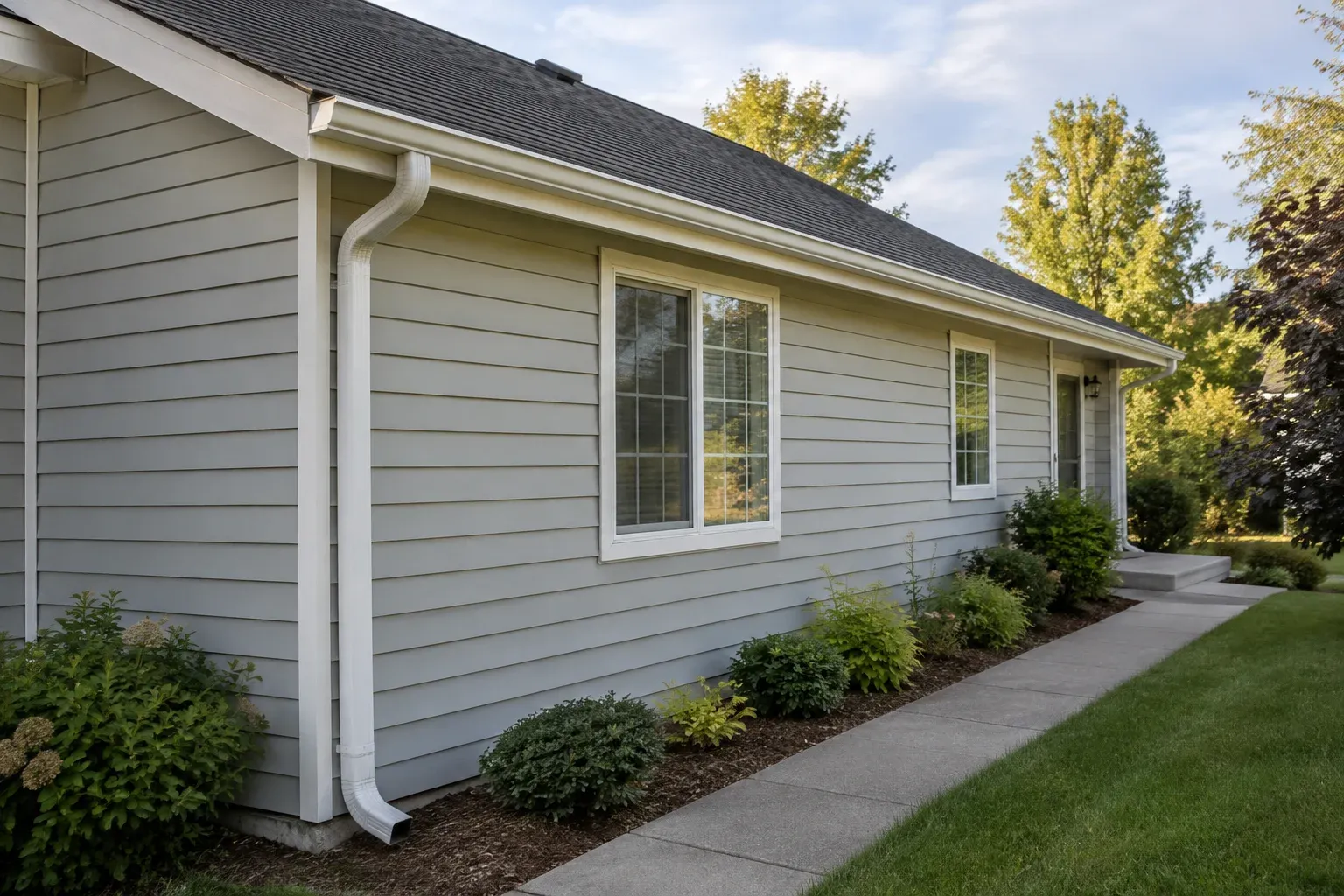
Before discussing exterior work with a construction company in Aurora, create a clear record of how your gutters look today. A useful record combines repeatable photographs with dated, factual observations. It helps homeowners, retail property owners and multifamily managers identify the same gutter run or downspout during later conversations. The goal is not to diagnose a problem from the sidewalk, but to preserve visible starting conditions before the surroundings change.
Construction company discussions become more precise when everyone can refer to a building face, a photograph number and a short description. Capture ordinary areas as well as anything that concerns you; a collection containing only close-ups can leave important context missing. Keep your observations separate from questions about repairs. A dark mark, uneven-looking edge or visible gap deserves a clear description, not an unsupported conclusion about failure or responsibility.
Map a Repeatable Ground-Level Route
Choose a simple route around the property and follow it for every photo session. Begin at a recognizable entrance, then work around the building in one direction. Name each elevation consistently, using compass directions if known or clear descriptions such as courtyard side and parking side. On larger properties, add a building identifier so similar walls, service entrances and repeated downspouts cannot easily be confused when someone reviews the folder.
Select safe standing positions that you can find again, such as a sidewalk joint or the edge of a patio. Record those positions in your notes without placing markers in traffic routes. Stay on accessible ground, outside restricted work areas and away from overhead electrical lines. Do not climb, lean from windows or step onto roofing to complete the record. Note any section that cannot be seen safely rather than guessing about its condition.
- Assign a clear name to each building face.
- Choose repeatable ground-level camera positions.
- Record inaccessible or obscured areas explicitly.
Capture Wide Views Before Detail Views
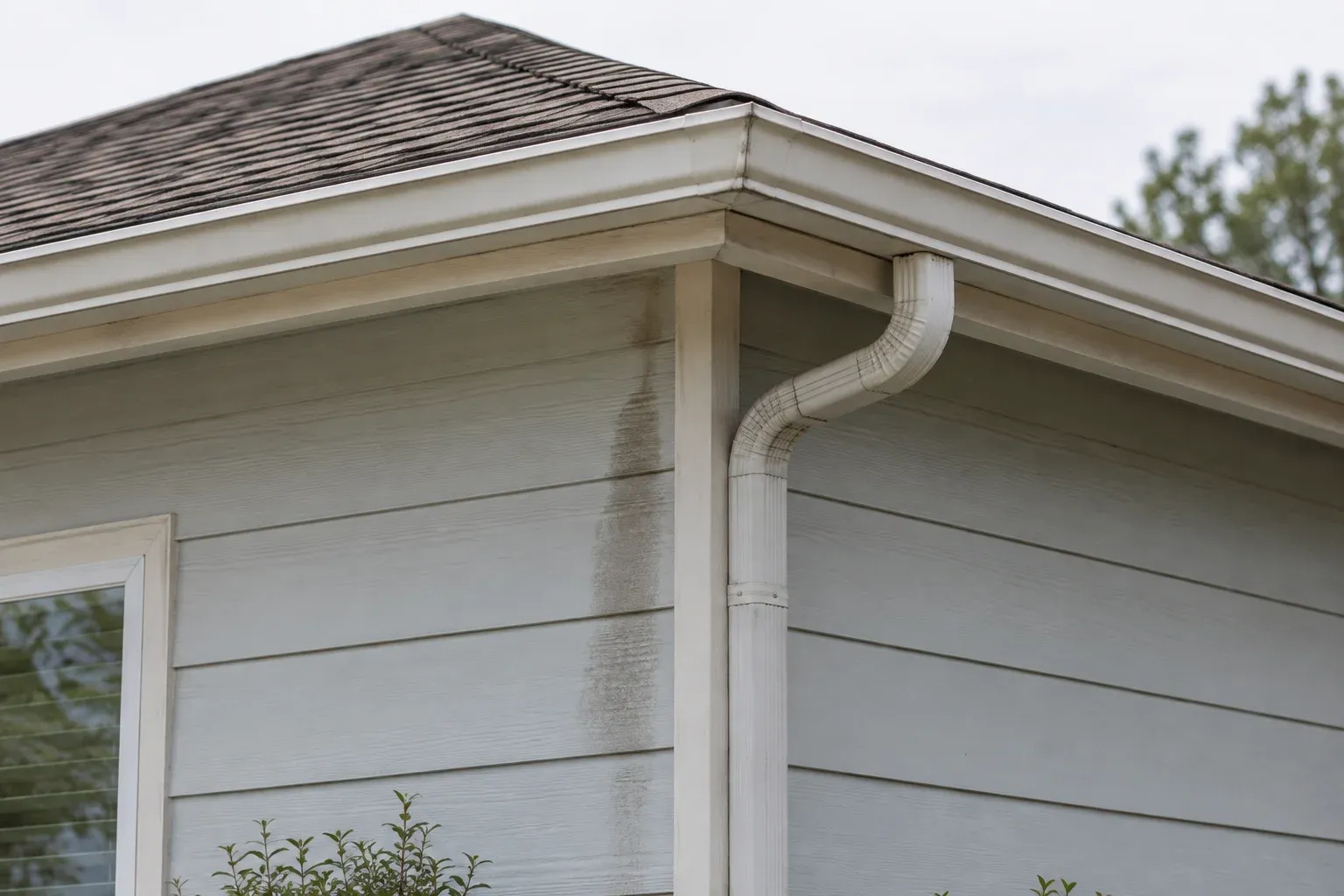
For each elevation, take a wide photograph showing the gutter run and recognizable surroundings. Follow with a medium view of each corner, joint and downspout connection that is visible from the ground. Add a closer image only when it records something the wider photograph cannot show. Keep enough wall, trim or nearby features in the frame to identify the location. An isolated metal surface may be difficult to place later.
Use the same camera orientation and similar framing during later visits. Avoid strong digital zoom, which can make edges and small gaps difficult to interpret. If your device offers different lenses, note which one you used and repeat it where practical. Take another image when glare or deep shadow hides a connection. Preserve the original files even if you also create cropped copies to highlight a question for discussion later.
Describe Alignment and Joints Without Diagnosing Them
Photograph the visible front edge of each gutter run against nearby roofline or trim features. Describe what appears in the image: a dip near the middle, a changed distance from the fascia or an edge that appears twisted. Camera angle and perspective can exaggerate these impressions. Ground-level photographs do not establish the gutter's measured slope, hanger security or internal condition, so avoid labeling an apparent irregularity as a confirmed installation defect.
At corners, end caps and visible seams, record gaps, staining, dents or exposed sealant without touching or testing the assembly. Use location-specific wording such as “dark streak below courtyard corner” instead of “failed corner joint.” If an issue is already visible, include both a contextual view and a detail view in the starting record. This makes it easier to recognize the same area later without suggesting that its appearance establishes when or why it developed.
Record Downspout Connections and Existing Staining
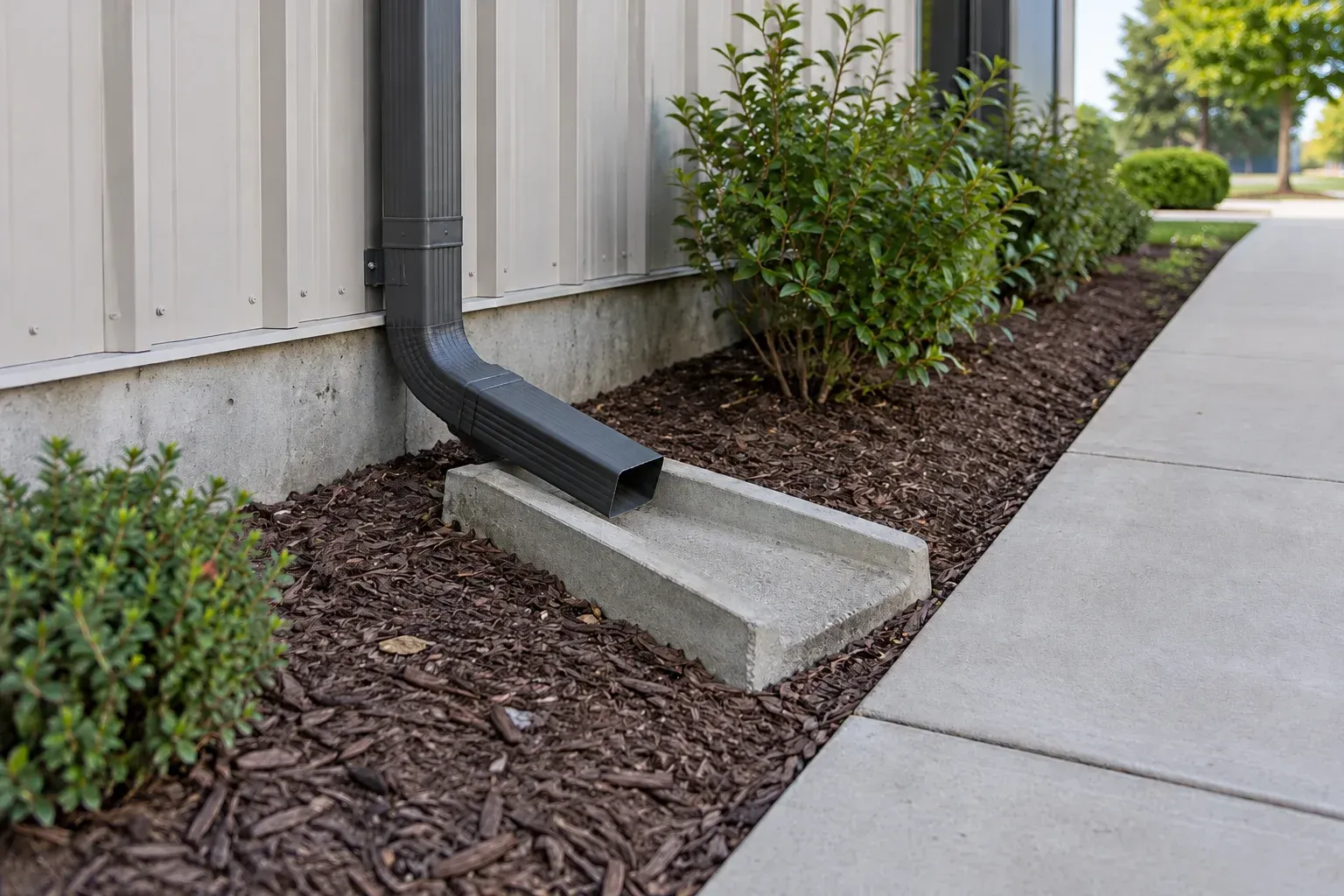
Follow each visible downspout from its upper connection to its discharge point, using separate photographs when one frame cannot show both clearly. Record elbow positions, visible connector gaps, wall straps and the relationship between the lower outlet and any extension or splash block. Where a downspout enters an underground pipe, photograph the visible transition only. The image cannot establish whether the buried line is clear, intact or connected farther downstream.
Include existing staining on siding, fascia, masonry and paving, along with nearby soil or mulch conditions. Describe color, approximate extent and location rather than assuming every mark came from gutter overflow. At a storefront or managed commercial property, distinguish pedestrian entrances from loading areas so another reviewer can locate the image. Avoid including tenant faces, vehicle plates or views through private windows when those details add nothing to the record.
Pair the Photographs With Dated Notes
Create a short log alongside the photographs. For each session, record the date, approximate time, building area and whether surfaces were dry, wet or partly obscured. Separate direct observations from background information. “Water dripping at the corner at 3 p.m.” describes something observed; “corner has leaked for years” needs an identified basis. If someone else supplies information, attribute it in your private notes rather than presenting it as your own observation.
Do not rely exclusively on a phone gallery's display order. Copy original files into a clearly named folder and keep a second copy elsewhere. A simple naming pattern using date, elevation and sequence number makes retrieval easier. Retain original metadata where available, but recognize that a file date alone is not conclusive proof of capture time. Keep annotated copies separate, and avoid editing originals to remove marks or improve apparent condition.
Compare Matching Views and Ask Focused Questions
For the later record, return to the same safe viewpoints and repeat the original sequence. Try for comparable light and surface conditions, but record differences rather than delaying indefinitely for a perfect match. Compare each wide view before examining details. A moved extension, different shadow or wet wall can create an apparent change. When framing differs substantially, take another photograph instead of drawing a firm conclusion from the mismatched pair.
Prepare a short set of questions tied to image numbers: Is this connection visibly different? Was this mark present in the starting record? Does the area need closer evaluation? Keep this documentation task separate from gutter removal and reinstallation timing, which involves a different planning question. For a construction company discussion in Aurora, a well-organized record supports clearer communication about visible changes while leaving diagnosis, hidden conditions and responsibility open to appropriate evaluation.
Frequently asked questions
Can gutter photographs prove what caused a change?
Not by themselves. Matched photographs can show visible differences between documented dates, but they usually cannot establish hidden conditions, the exact time of a change or its cause.
Should I use a ladder to complete the record?
Do not climb solely to fill a documentation gap. Use safe ground-level viewpoints and optical zoom where available. Identify concealed or inaccessible areas in your notes rather than assuming they are in good condition.
What if my before-and-after photographs were taken in different weather?
Keep both sets and record the difference. Wet surfaces, shadows and snow can change appearances. If practical, add another set in comparable dry conditions without deleting the earlier photographs.