
Construction company in Commerce City: Records for Future Gutter Service
Build a practical gutter reference file after construction, separating completed changes from proposals and confirmed component details from unanswered questions.

Build a reference file, not a performance certificate
After a construction company project in Commerce City, gutter information can end up scattered across email, invoices, photographs and handwritten notes. A reference file brings those pieces together so a future service provider can understand what changed without reconstructing the entire job. Its purpose is documentation, not diagnosis: organized records can explain the project history, but they cannot confirm that a gutter system performs correctly or that concealed building materials are sound.
Keep the file with the building’s permanent records, whether you manage a home, rental property, retail building or warehouse. Start with a short index identifying the property, project dates and folders for scope, products, photographs, locations, questions and service history. When reviewing Construction company information, distinguish general service descriptions from the written scope for your particular project; only the latter identifies what was actually agreed for that property.
Separate the final scope from earlier proposals
Place the final agreed scope and any written changes at the front. Retain earlier proposals in a separate folder marked as superseded or unapproved, rather than deleting them or mixing them with completion records. Where documents differ, add a dated note identifying the discrepancy. A line item on an estimate is not evidence of installation, and a payment record alone may not explain which gutter sections were retained, removed or replaced.
Summarize completed gutter changes in plain language, using the supporting document’s wording where possible. For example, distinguish temporary removal and reinstallation from replacement with new components. Our discussion of gutter removal and reinstallation sequencing provides context for that distinction. If roof or siding work occurred nearby, record it separately: those trades may affect project sequencing, but their completion does not establish that gutter adjustments or drainage corrections were also performed.
Preserve product details without filling gaps by guesswork
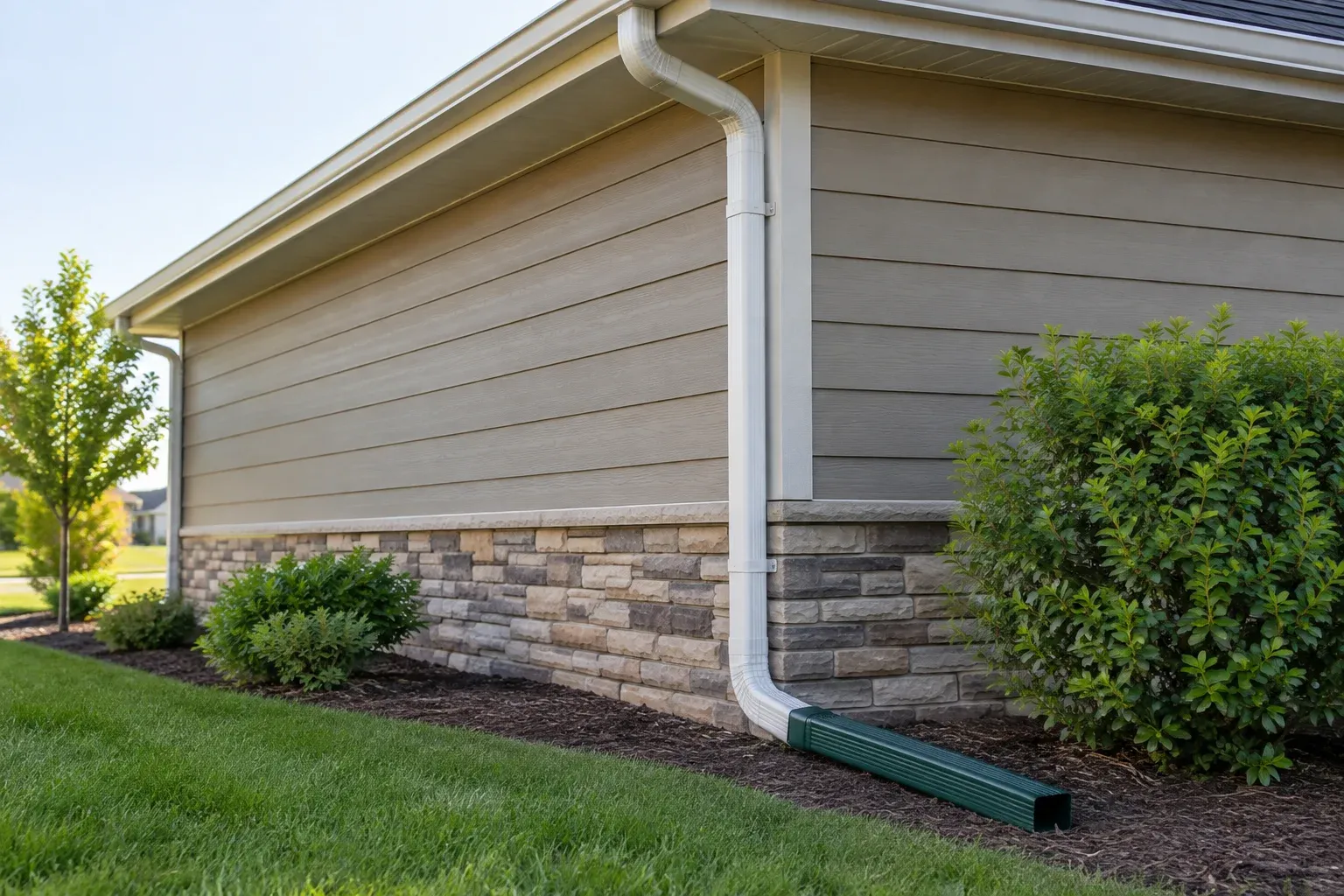
Save available invoices, product labels, manufacturer literature and finish references for installed gutter components. Useful details may include gutter profile, material, documented dimensions, downspout shape, color name and product code. Preserve the source alongside each detail. A supplier invoice is different from a visual guess, and a brochure showing several options does not identify which option was installed. If the records do not establish a specification, mark it unknown.
Include accessory information only when it is available: guards, outlets, elbows, extensions and other visible components may have separate documentation. Keep any supplied care instructions or warranty documents in their original form without expanding their terms. Avoid selecting a replacement finish from an aged photograph alone. Lighting, weathering and display settings can alter appearance, so a future provider may need additional identification before determining whether a proposed component is compatible.
Map components so later notes identify the right location
Create a simple property sketch showing gutter runs, downspout positions and visible discharge points. Choose one consistent orientation, such as street side, rear, north and south, and assign short identifiers to each run and downspout. A shop or warehouse may also need building letters, unit references or loading-area descriptions. The sketch is a location guide, not a measured construction drawing, hydraulic design or confirmation of underground pipe routing.
Record where an outlet enters the ground, but do not draw an assumed buried route to a destination you cannot verify. Keep observations about gutter clogs and downspout backups separate from confirmed findings. Note access restrictions, such as a locked courtyard or occupied delivery area, without sharing security codes in the general file. For altered building layouts, planning for maintainable gutter access offers related context; the closeout sketch should show what was completed.

Label completion photographs and retain their limits
Keep a dated set of completion photographs showing each building side, major gutter run, downspout and visible outlet. Take wide views first, then closer views from a safe ground-level position where practical. Use filenames that connect to the sketch, such as a date followed by the downspout identifier. Preserve original image files, because compressed copies pasted into a document may lose useful detail or their original capture information.
Store before-work images separately from completion images so the two cannot be confused. Guidance on documenting gutters’ starting condition can help explain why a baseline matters, but the completed-work folder should stand on its own. Describe only what a photograph shows. An exterior image cannot establish hidden fastener condition, precise slope or watertightness. Do not climb onto a roof or use a ladder simply to fill a missing photographic record.
Track unknowns without presenting them as findings
Give unanswered questions their own page. Record the date, component identifier, question, supporting image or document, and whether anyone has supplied a written response. Useful entries might ask whether a particular run was replaced or whether an existing outlet remained unchanged. Avoid turning an observation into a diagnosis: “water seen at the corner during rain” records an event, while “incorrect installation” asserts a cause that the observation alone cannot establish.
Do not let an unresolved question disappear when another appointment is scheduled. Carry it forward until there is a documented answer, or mark it closed with an explanation. If the issue concerns discharge beyond the visible downspout, information about shortlisting drainage service providers may help frame later questions. Keep that inquiry distinct from construction closeout: documenting an outlet does not assess buried drainage, and organizing records does not correct a water-management problem.
Keep contacts and a dated service log together
Maintain a contact sheet listing the organizations named in your records, their documented project roles and current public contact details when available. Separate the construction contact, product supplier and any independently engaged service provider. A company name appearing on correspondence does not establish responsibility for every exterior component. For shared properties, identify the person authorized to release records and arrange access, while keeping tenants’ personal details outside the general reference copy.
Finish with a dated service log recording observations, visits, completed work and linked documents under the same component identifiers. Keep recommendations separate from completed actions, and save a backup that can transfer with property management responsibilities. For a construction company project in Commerce City, this organized history gives future providers a clearer starting point. Actual inspections, gutter work, roof repairs and drainage corrections remain separate tasks, each requiring its own appropriate scope.
- Date and component identifier
- Observation or reason for the visit
- Documented work completed and by whom
- Related photographs, invoices and remaining questions
Frequently asked questions
What if the original gutter product information is missing?
Mark the manufacturer, model or finish as unknown rather than guessing. Keep available invoices and ground-level photographs, and ask a future provider what identification would be needed before selecting replacement components.
Do completion photographs prove that gutters work correctly?
No. Photographs document visible conditions at a particular time. They do not establish hidden attachment details, measured slope, drainage capacity or the condition of concealed materials.
Should proposed work stay in the same folder as completed work?
It can stay in the same overall archive, but use separate, clearly labeled sections. Keep proposals, approved changes, completion records and unresolved questions distinguishable so a later reader does not mistake a recommendation for finished work.