
Drainage Service in Aurora: What to Record About a Buried Downspout Line
Build a useful record of a buried downspout line by documenting visible components, preserving installation evidence and separating facts from assumptions.
Create a record that preserves facts, not guesses
Preparing for Drainage service in Aurora can begin with a simple property record rather than an attempt to uncover the pipe. Once a downspout disappears below ground, its route, connections and outlet may become difficult to describe accurately. A useful file preserves what is visible, what installation records establish and what remains unknown. That information can help a homeowner explain the system later without turning a remembered detail into an unsupported fact.
The goal is continuity, not diagnosis. A sketch cannot establish pipe condition, and an old photograph cannot prove that a buried connection remains intact. Keep those limits clear from the start. The same approach helps rental owners, retail property managers and office maintenance teams pass information between people. Unlike documenting gutters before construction, this record follows a buried drainage line through ordinary ownership, including periods when nothing appears to change and no work is planned.
Map visible components and leave unknown routes unknown
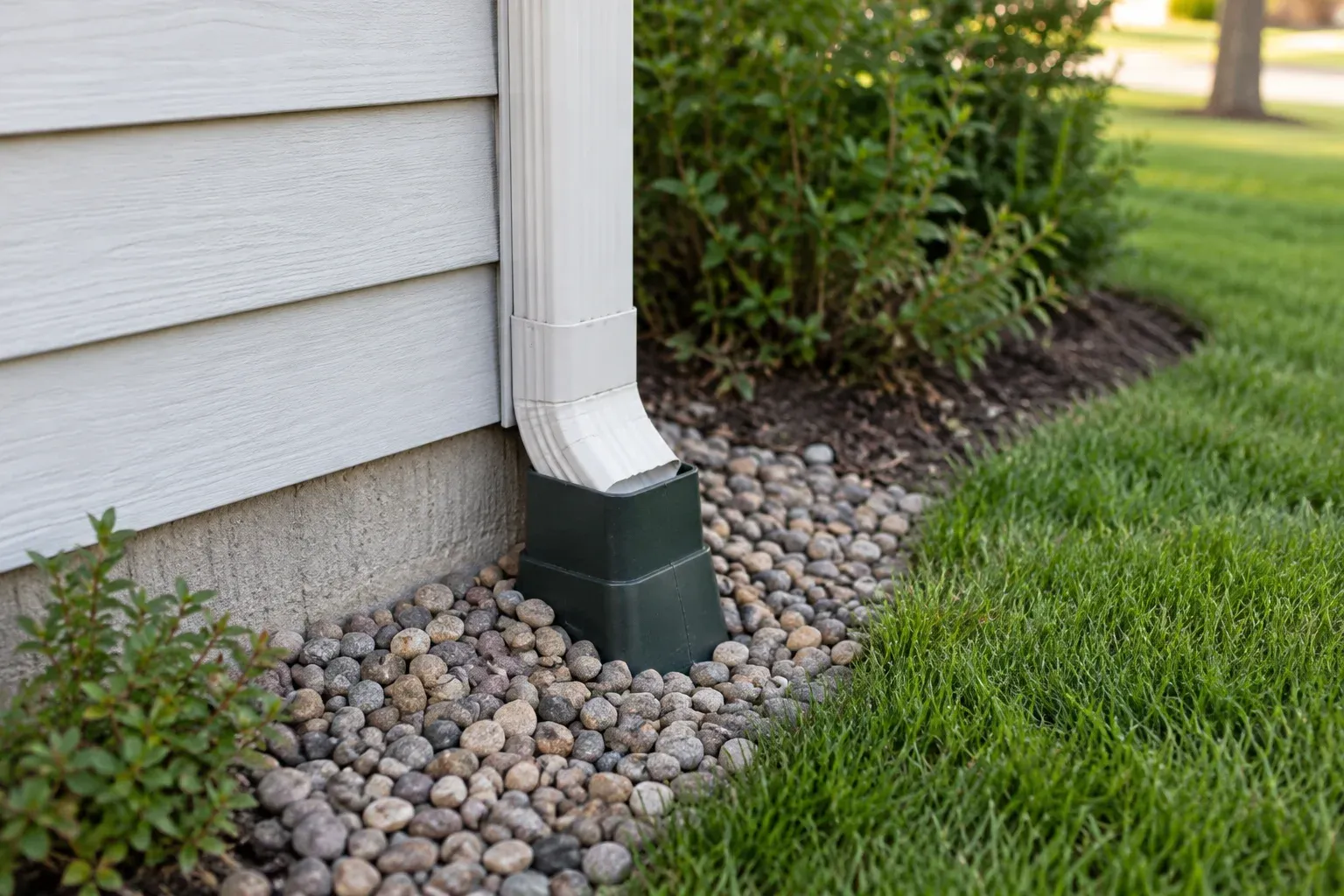
Start with the visible inlet: the point where the downspout enters an adapter, basin or pipe at ground level. Give each inlet a stable identifier, such as northeast corner downspout, and use it consistently across photographs and notes. Describe its position relative to lasting features, including the building corner, patio edge or garage wall. Measurements taken safely at the surface can add useful context, but identify the reference points and avoid implying survey accuracy. A movable planter or seasonal garden border makes a poor permanent reference.
On a simple plan view, mark visible outlets and accessible connection points separately. An exposed cap is not automatically a cleanout, and a nearby outlet does not prove that a particular downspout feeds it. Draw a solid route only where reliable installation evidence establishes it; use a dashed line labeled unconfirmed for a suspected route. If no route is known, leave the space blank. Note whether an outlet is visible from your property without crossing a boundary or entering an unsafe area. Keep the existing discharge location distinct from questions about downspout water after yard changes. Do not dig, probe the soil or remove fittings merely to complete the drawing. Unknown is a useful entry when evidence is missing.
Keep photographs that someone else can orient
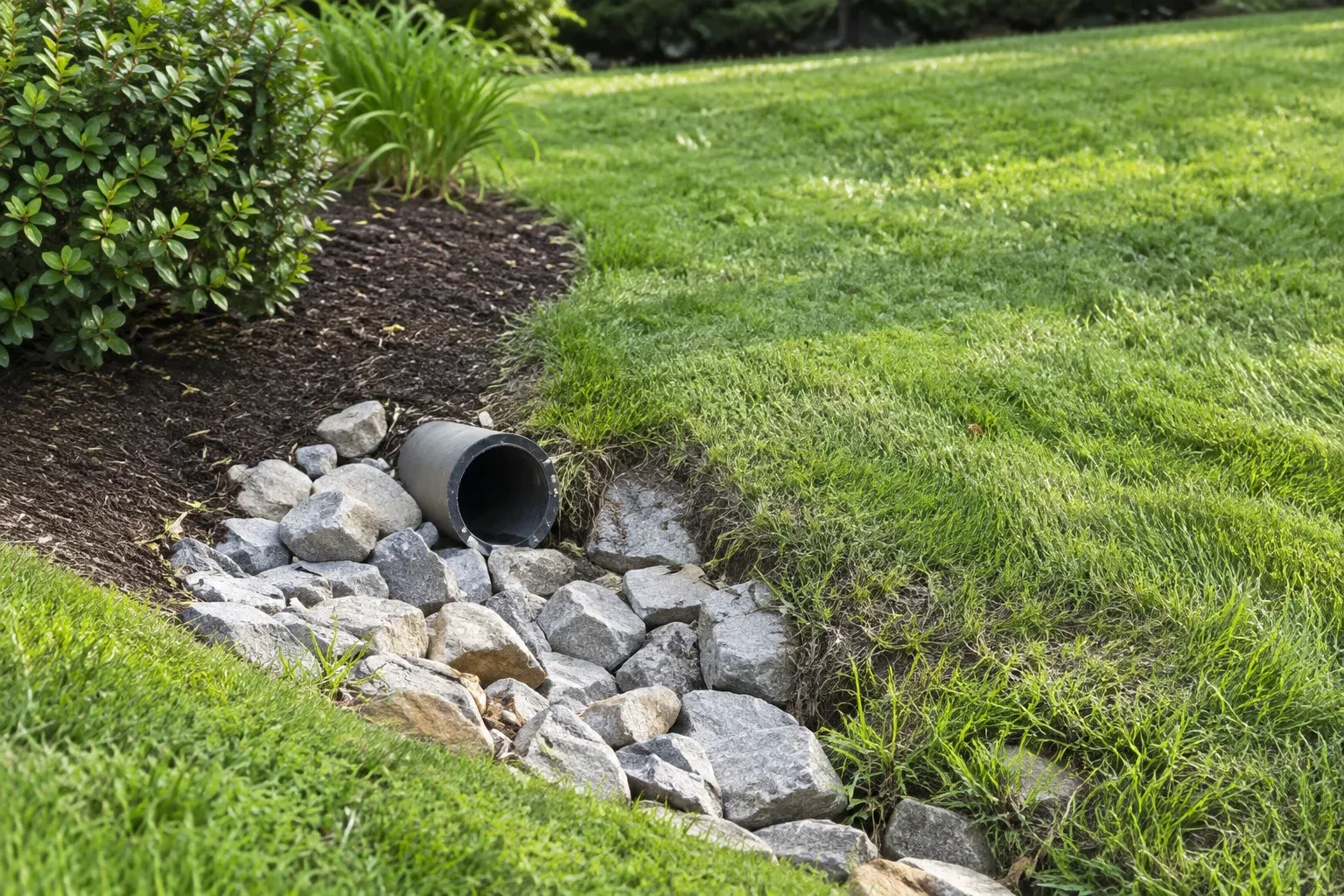
Take an overview photograph before moving closer. Include enough of the wall and surrounding ground to show which downspout you mean, then photograph the visible adapter and any accessible outlet. Keep the camera position repeatable: standing beside the same walkway corner is more useful than an isolated close-up with no landmarks. Photograph only what can be reached safely from the ground. There is no need to climb, open a buried component or stage water flow for a more complete-looking record. Keep original image files rather than relying solely on compressed message attachments.
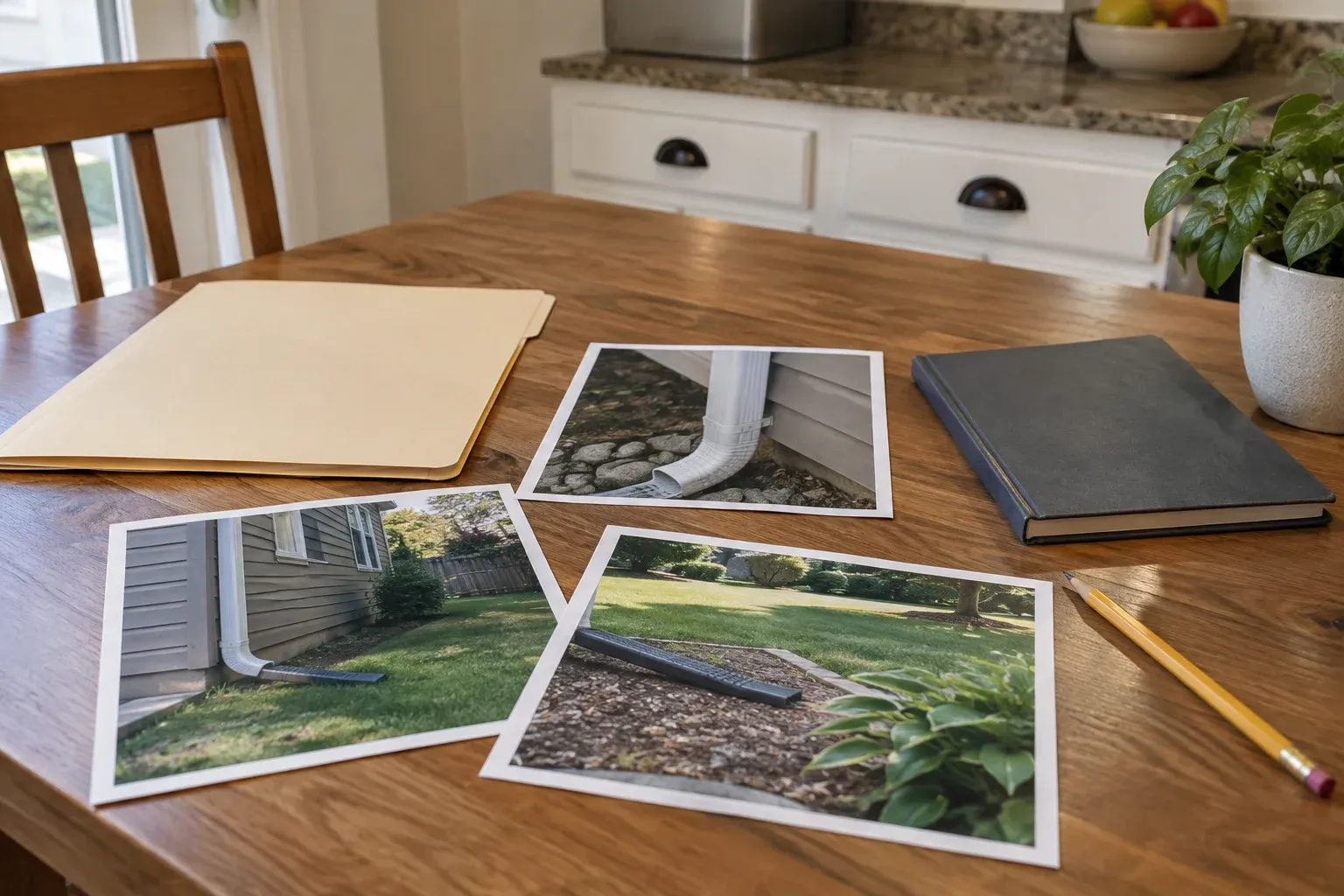
If installation photographs already exist, preserve the full sequence, including wide views taken before backfilling. A close photograph may show a fitting while concealing which side of the building it served. Store dates, the photographer or document source when known, and any accompanying explanation. Keep an untouched original alongside an annotated copy. Link each image to the inlet identifier on your sketch. Records of repair or whole-run replacement decisions may explain later changes above ground, but they should not be treated as evidence that an unseen drain connection was also replaced.
- One overview showing the inlet in relation to the building.
- One closer view of the visible ground-level connection.
- One contextual view of each safely accessible outlet.
- Existing installation photographs retained with their dates and source.
Record materials and connections only when documented
Record pipe material, nominal diameter and connection type only when an invoice, product record, installation photograph or other reliable evidence supports the detail. Name the source beside the entry. For example, distinguish a diameter listed on an installation invoice from a rough impression based on the exposed opening. Visible color alone is not enough to identify an entire buried line. An adapter can also join different materials, so describe the visible component without extending that description underground. If a document covers several drains, note whether it identifies this particular line.
Keep documented branches, junctions and access points in the same file, with their locations and evidence. Do not assume separate downspouts remain separate underground or that every fitting visible in an old photograph is still accessible. Preserve invoices and drawings in their original form, then summarize them in plain language. Where two records disagree, retain both and flag the conflict rather than choosing the more convenient version. Missing depth, slope or route information should remain missing until reliable evidence becomes available; a tidy diagram is less important than an honest one.
Maintain an observation history without diagnosing the line
Add short, dated observations rather than rewriting the system description whenever something changes. Useful entries identify the inlet, weather context, visible condition and photograph number. Write water remained around adapter after rainfall rather than pipe blocked unless a documented finding establishes the blockage. Separating a gutter clog from a downspout backup is a different task from keeping records. Your log should preserve the observation without deciding its cause. Include uneventful observations occasionally, since a dated view of the normal arrangement can provide a useful comparison later.
After maintenance or alterations, retain the date, the work description supplied and any stated limitations. Note whether a visible adapter was changed, an outlet became obscured by planting or a patio altered the available reference points. Do not interpret a maintenance entry as proof that every buried section was examined. For managed properties, keep the master file somewhere successors can access it instead of leaving the only copy on one employee's phone. Save a backup, and label superseded sketches with their dates so an old arrangement is not mistaken for the current one.
Prepare a concise drainage-service inquiry
Before making a Drainage service inquiry, assemble a short summary rather than sending an unexplained folder of images. Identify the property, the relevant inlet, the reason for the inquiry and the limits of your knowledge. Attach the current sketch, a few labeled photographs and any directly relevant installation or maintenance records. Explain which route details are confirmed and which remain assumptions. Ask what additional information would be useful before attempting to collect it, especially if doing so would require opening a component or accessing an awkward area.
When contacting Kings Exteriors & Gutter Systems LLC, ask about availability for your location and circumstances rather than assuming a particular service or assessment is offered. Keep the same concise record available for future ownership transfers or maintenance discussions. A useful file does not need to reveal everything beneath the lawn: it needs to preserve evidence and make uncertainty obvious. For homeowners preparing for Drainage service in Aurora, that distinction keeps future conversations grounded in what is actually known.
Frequently asked questions
What if I do not know where the buried downspout line goes?
Record the visible inlet and any separately visible outlet, but label the connection and route as unknown. Keep older plans or photographs as supporting records without treating an unverified drawing as proof. Do not dig or probe to fill gaps in the file.
Can installation photographs confirm the pipe's current condition?
No. They can preserve evidence of what was visible when the photographs were taken, but they do not establish the condition of buried sections today. Retain their dates and note any later changes.
What should I send with an initial drainage-service inquiry?
A short description, labeled overview photographs, a sketch separating known details from assumptions, and dated maintenance observations are useful starting materials. Ask the provider what additional information is needed and confirm service availability separately.