
Drainage Service in Denver: Clarifying Assumptions Before Approving Work
A practical guide to separating evidence from assumptions in a Denver drainage proposal and deciding when further work needs fresh approval.
Start with the evidence behind the recommendation
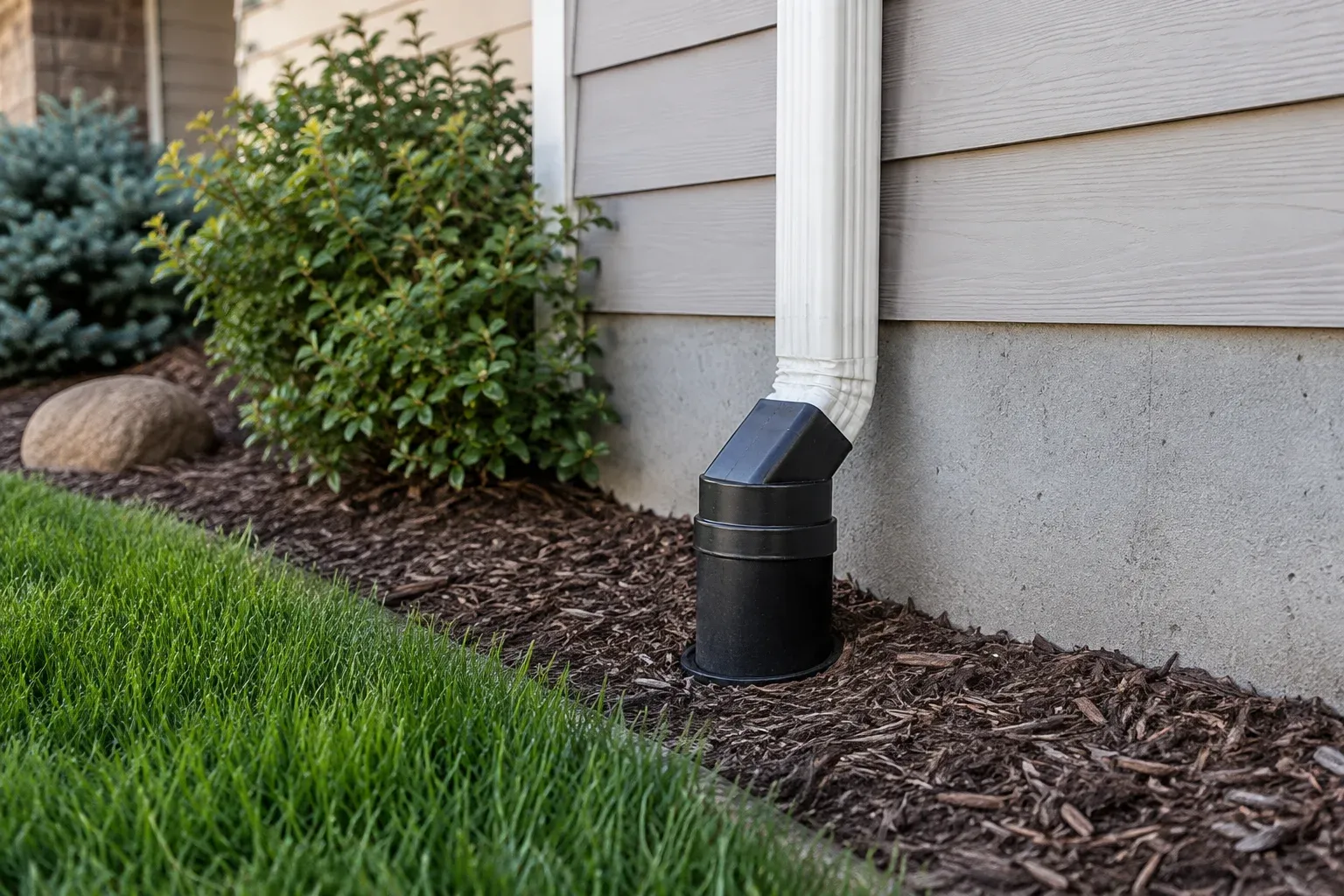
Before approving Drainage service in Denver, separate what has actually been observed from what someone believes is causing the problem. Water beside a foundation, a backing-up downspout or a persistently wet lawn can justify attention without proving a particular underground defect. A useful proposal explains that difference. It should let you understand why a step is recommended, which uncertainties remain and when new information would require another decision rather than automatic continuation.
This matters for homeowners, rental-property owners and managers of offices or retail premises alike. Approving investigation is not necessarily the same as approving a permanent correction. Before signing, read each recommendation as a chain: observed condition, suspected explanation, proposed action and expected finding. If a link in that chain is missing, ask for clarification in ordinary language. The goal is not certainty about everything; it is knowing what your authorization covers.
Label observations, reports and suspected causes separately
An observation describes something seen or measured under stated conditions. For example, water rose at a downspout connection during rainfall, or standing water remained beside a walkway the following morning. An explanation goes further: a buried pipe may be obstructed, disconnected or unable to pass the incoming flow. Ask which statements belong in each category. Words such as “likely,” “assumed” and “not visible” are useful when they accurately describe the limits of the evidence.
Check whether the proposal considered another plausible source before committing to a correction. A discussion of gutter clogs versus downspout backup can help frame that distinction, but symptoms alone do not establish which component failed. If overflow was reported but not witnessed, that should remain a reported condition. Ask what additional observation would support the proposed cause and what evidence would point elsewhere. This keeps a reasonable working theory from becoming an unsupported statement of fact.
Identify underground unknowns that affect the sequence
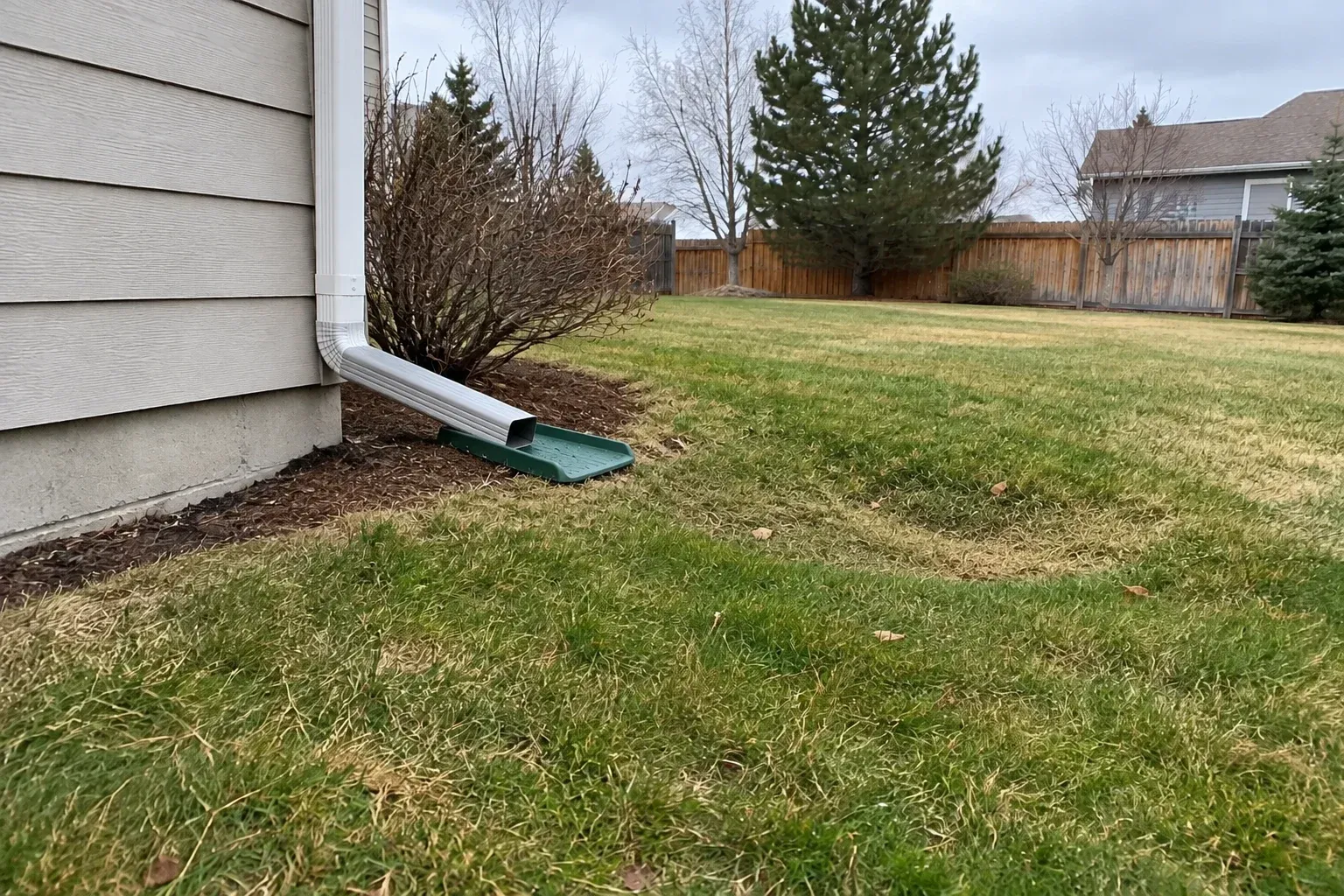
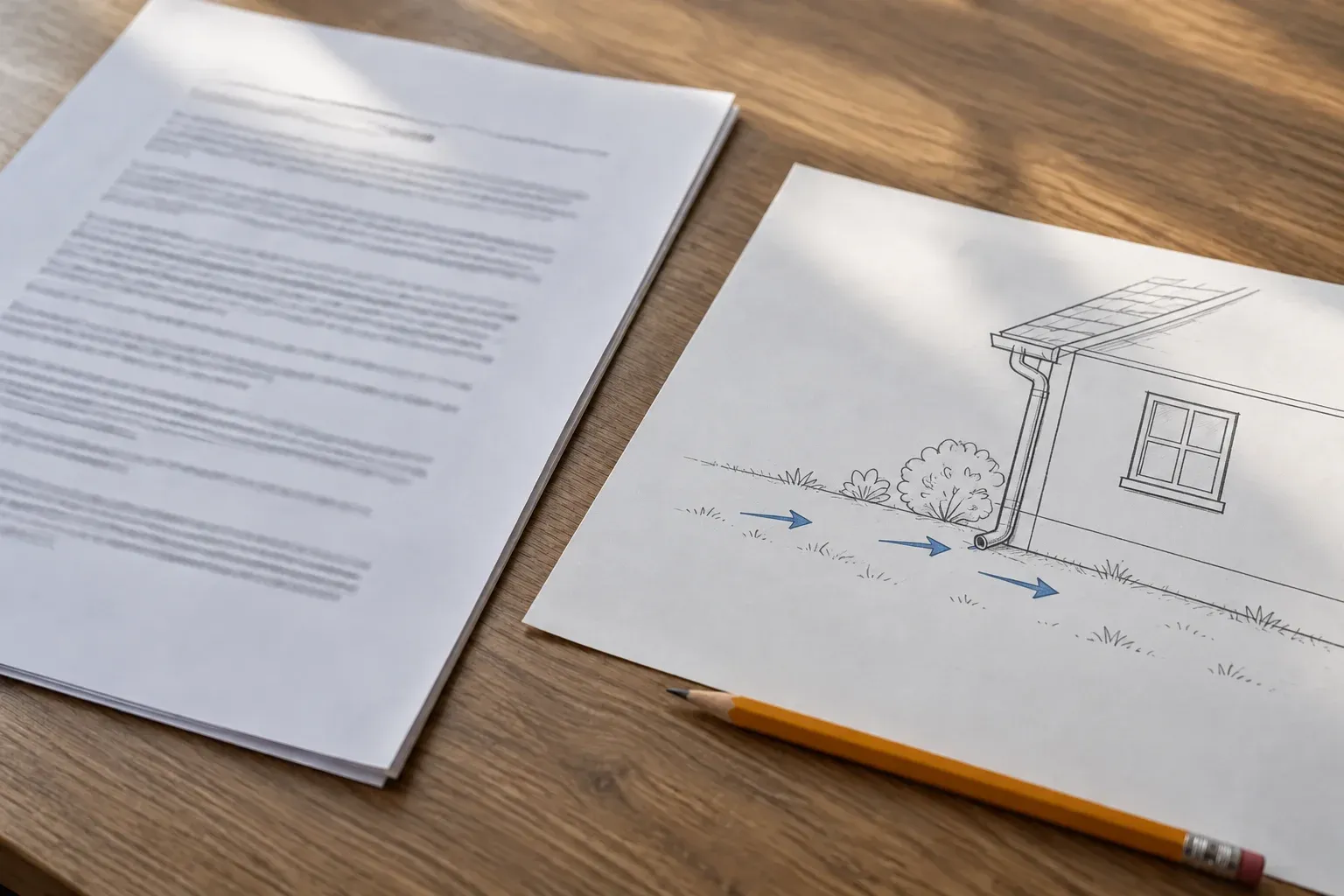
A downspout disappearing into the ground does not reveal where its pipe ends, whether another inlet joins it or whether the visible outlet belongs to that line. If the recommendation depends on one of those connections, ask how it was established. A sketch can distinguish visible features from an assumed route without presenting the entire underground system as known. Existing records may help, but their accuracy and relevance still need consideration.
Guidance on recording a buried downspout line provides background on organizing available information. For approval purposes, however, the key question is narrower: does an unknown connection change what should happen first? If the proposed correction assumes an independent line but a shared connection remains possible, request an explanation of how that uncertainty will be resolved. Ask whether the next authorized step establishes the connection or proceeds on an expressly stated assumption.
Make access limits and discharge questions explicit
Access limits should explain what could not be checked and why that matters. A locked courtyard, finished paving, stored materials or an inaccessible outlet may leave part of the diagnosis unresolved. For commercial and multifamily properties, tenant access and delivery routes can also constrain investigation. Ask whether the recommendation remains appropriate despite those limits, or whether access must be arranged before choosing corrective work. A restriction should not quietly become an assumption about hidden conditions.
Discharge deserves the same scrutiny. A proposal may describe moving water away from a building without establishing where it will ultimately go. Ask what receiving area or outlet is intended and what remains unresolved about its suitability. The related discussion of drainage after yard changes illustrates why surrounding features matter. Here, the approval issue is whether the proposed destination has been established or whether further evaluation is needed before committing to the route.
Separate investigation from corrective work
Ask the proposal to distinguish actions intended to learn something from actions intended to correct a confirmed condition. Investigation might involve observing accessible components or an appropriate test selected for the situation. Corrective work changes the system. Some actions can serve both purposes, but that overlap should be explained. Clarify the question each investigative step is meant to answer, its limits and what result would justify moving forward rather than simply repeating the original recommendation.
A written scope still matters, as the guide to comparing gutter proposal scopes explains for a related exterior system. In this drainage decision, go beyond the task list: ask which tasks are authorized now and which remain conditional. If an initial attempt does not resolve the symptom, does authorization stop, or does it include another step? Define that boundary before work begins, including how any additional charge and schedule change would be presented for approval.
Set a clarification checkpoint before additional work
Request specific examples of findings that would change the recommendation. An open outlet, an unexpected connection or evidence that water arrives from elsewhere could alter the next step. The response should explain the decision, not promise a predetermined result. General questions for a prospective provider can support clear communication, but this checkpoint concerns the reasoning within the proposal already in front of you. Ask what would make the proposed correction unnecessary, insufficient or premature.
Then identify a pause before additional corrective work proceeds. Agree who receives the findings, who can authorize a change and what information they need. For a managed property, the on-site contact may not have spending authority. Request a short explanation of the new evidence, revised recommendation and any scope or schedule consequences. Also clarify how an interrupted work area would be left safe if a decision cannot be made immediately.
- What finding would change the recommended correction?
- Where does the current authorization end?
- Who must approve a revised scope before further work?
Approve a defined next step, not an unstated assumption
Before signing, read the proposal once more with those boundaries in mind. You should be able to identify the confirmed symptom, the working explanation, unresolved conditions and the next decision point without reconstructing a verbal conversation. Request that material clarifications be reflected in the written agreement. This does not remove every uncertainty; it makes uncertainty visible and gives both parties a shared basis for deciding what happens next.
For drainage service in Denver, a useful approval is informed and limited to the work you understand. You do not need to diagnose the underground system yourself. You do need to know why the proposed sequence makes sense, what could change it and when further authorization will be requested. Keeping those questions separate from promises about outcomes makes the decision clearer for any property owner or manager in Denver.
Frequently asked questions
Does an uncertain diagnosis mean a drainage proposal is unsuitable?
Not necessarily. Underground conditions may remain unknown until limited investigation occurs. The important distinction is whether the proposal identifies those unknowns, explains how they affect the recommendation and provides an approval checkpoint before additional corrective work.
What should I ask when a proposal says an underground line is blocked?
Ask what evidence supports that statement, which portion of the line was accessible and whether the outlet and connections are confirmed. Also ask what finding would point toward a different cause or change the proposed correction.
What if investigation reveals a different problem?
Request an explanation of the new finding, its effect on the original recommendation and any revised scope, authorization amount or schedule. Additional corrective work should follow the approval process agreed upon before investigation began.