
Drainage service in Thornton: Preparing for a Remote or In-Person Consultation
Learn what to gather before a drainage conversation in Thornton, how preparation differs by consultation format, and which questions help keep unknowns clear.
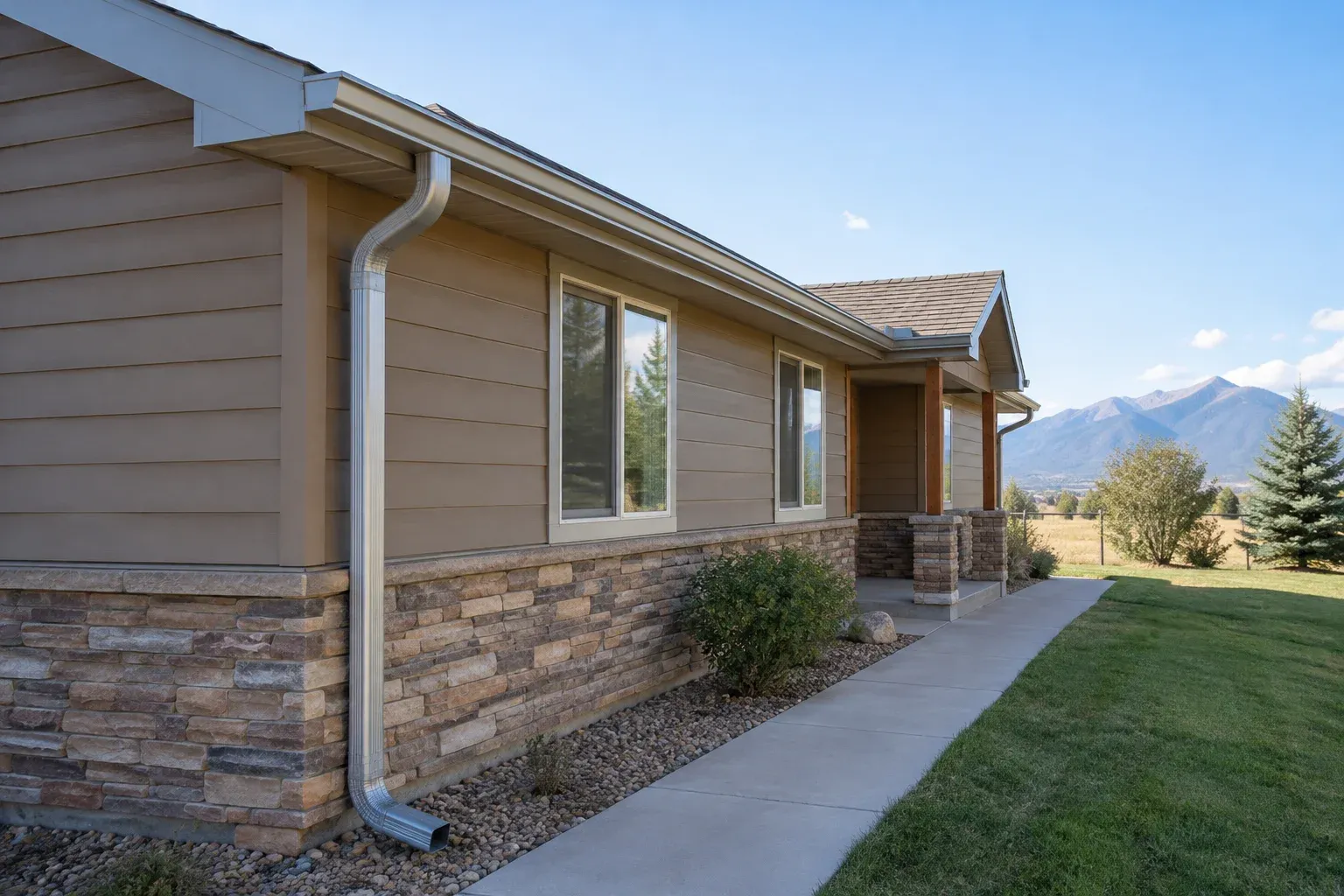
Confirm the format and purpose first
Preparing for a Drainage service conversation in Thornton starts with confirming how the conversation can happen. Ask whether a remote discussion, an in-person visit or another arrangement is available for your property. Confirm who should attend, what information to send, any charges and what the discussion is intended to establish. A service-page listing alone does not confirm an appointment format or availability.
Use the Drainage service background page as a starting reference, then ask which property details would be useful. The goal is a clear handoff, not a diagnosis prepared by the owner. Related guidance on questions for a prospective provider can help you phrase initial requests. Keep this preparation focused on sharing observations; choosing a provider and authorizing work are separate decisions that require their own information.
Prepare one shared set of property facts
Prepare a brief property summary that identifies the building type, the affected side and the area's everyday use. A homeowner might describe a side yard beside a garage; a retail manager might identify a rear walkway used by staff. Include who controls access and who can answer maintenance questions. Avoid sending unrelated tenant information, security details or a complete property archive when a short summary will do.
Build a timeline using dates where known and approximate periods where necessary. Record when you first noticed the condition, whether it appeared during rain or snowmelt, and how long visible water remained. Note relevant changes such as paving, landscaping or a moved extension without assuming they caused the problem. Background on drainage after yard changes can help you identify changes worth mentioning in that timeline.
Separate observations from assumptions. Write “water remained beside the outlet the following morning,” rather than “the underground pipe failed.” Describe visible gutter and downspout connections without guessing their hidden route. If a connection disappears below ground, mark it unknown. The discussion of buried downspout records offers additional context for organizing documents you already have.
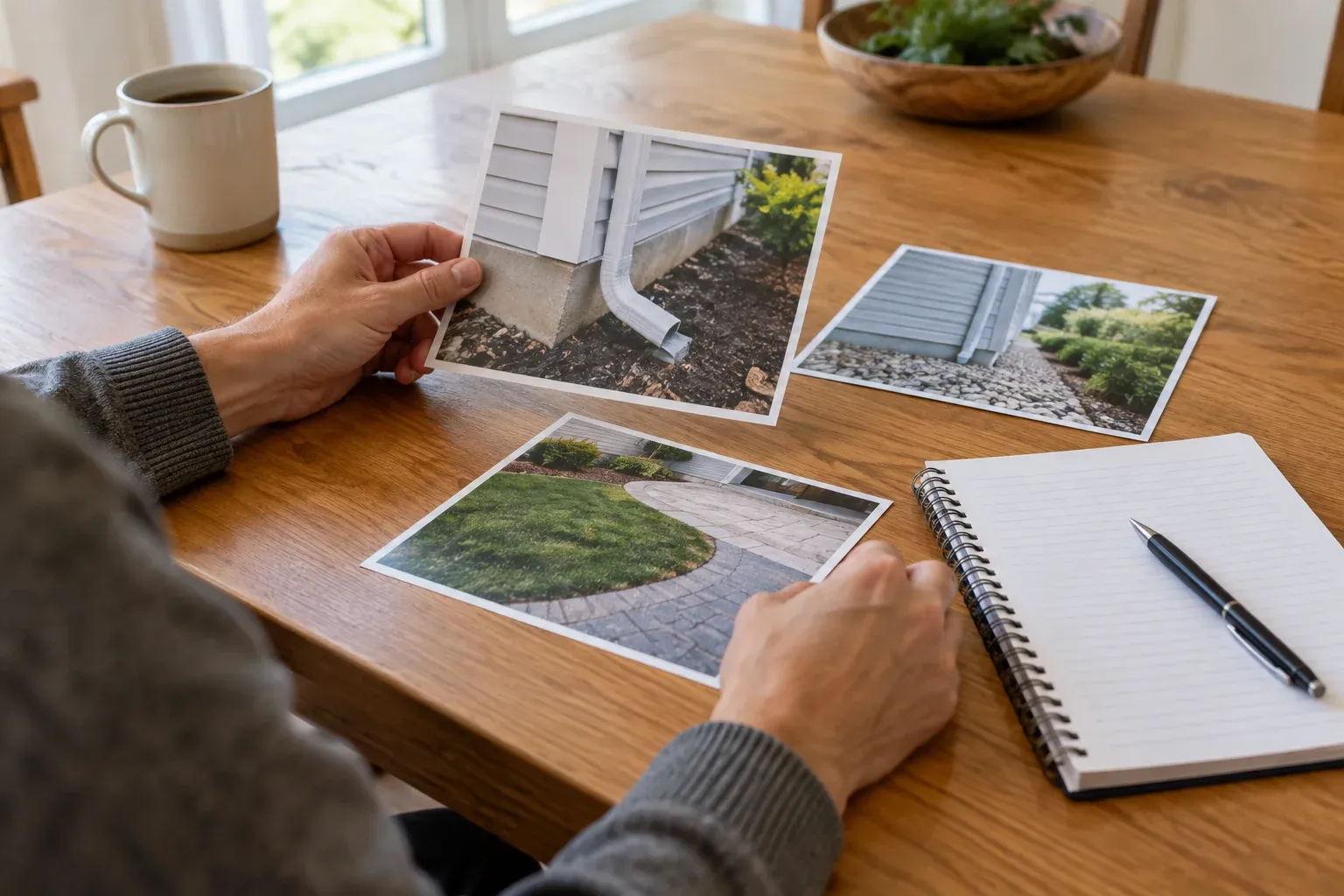
Remote preparation: make the visual context clear
For a remote conversation, photographs must supply the context that someone standing outside would otherwise see. Start with a wide view showing the building corner, roof edge, downspout and adjoining ground. Add a medium view of the connection or affected area, followed by a detail photograph. Keep the same identifying landmark visible where possible so the recipient can connect the images without guessing which corner they show.
Group images by location rather than sending a mixed stream of close-ups. Label files with a simple location and date, and explain the viewing direction in your message. Include dry-weather images as well as any existing photographs taken safely during the event. The distinction between gutter clogs and downspout backups is useful background, but pictures of overflow alone should not be presented as proof of either condition. Describe where water was visible instead.
Confirm how files should be delivered and whether they need to arrive before the conversation. For video, check the connection from a safe, dry location and have saved photographs ready if coverage drops. Do not climb ladders, open buried connections or walk outside during lightning to improve the view. Ask what cannot be established remotely: images generally cannot verify concealed connections, pipe condition, measured slopes or underground destinations. A remote discussion may identify missing information without resolving the cause.
In-person preparation: arrange access and preserve context
For an in-person visit, the additional preparation is access rather than a larger photograph collection. Confirm the meeting point, permitted entry areas and whether the person attending needs an owner or manager present. Explain locked gates, pets, tenant restrictions and delivery traffic beforehand. At offices, shops or managed residential buildings, arrange any necessary permission through the responsible person rather than assuming an appointment permits unrestricted access.
Choose a short walking route connecting the locations in your notes. Make ordinary access clear where safe, but leave outlets and surrounding conditions unchanged unless an immediate safety need requires action. Do not remove pipe fittings, excavate or rearrange drainage components merely to prepare. If you have already moved an extension or cleared loose material, record when that happened and retain earlier photographs so the change is not mistaken for the original condition.
Have the same timeline and image set available during the walk. A dry-day visit may not reproduce the water pattern you observed, so dated photographs remain useful even when someone can see the property directly. Point out the exact locations rather than asking the visitor to infer them from general descriptions. Confirm what the visit includes; being on site does not automatically mean concealed conditions will be examined or that measurements, testing or written recommendations are included.
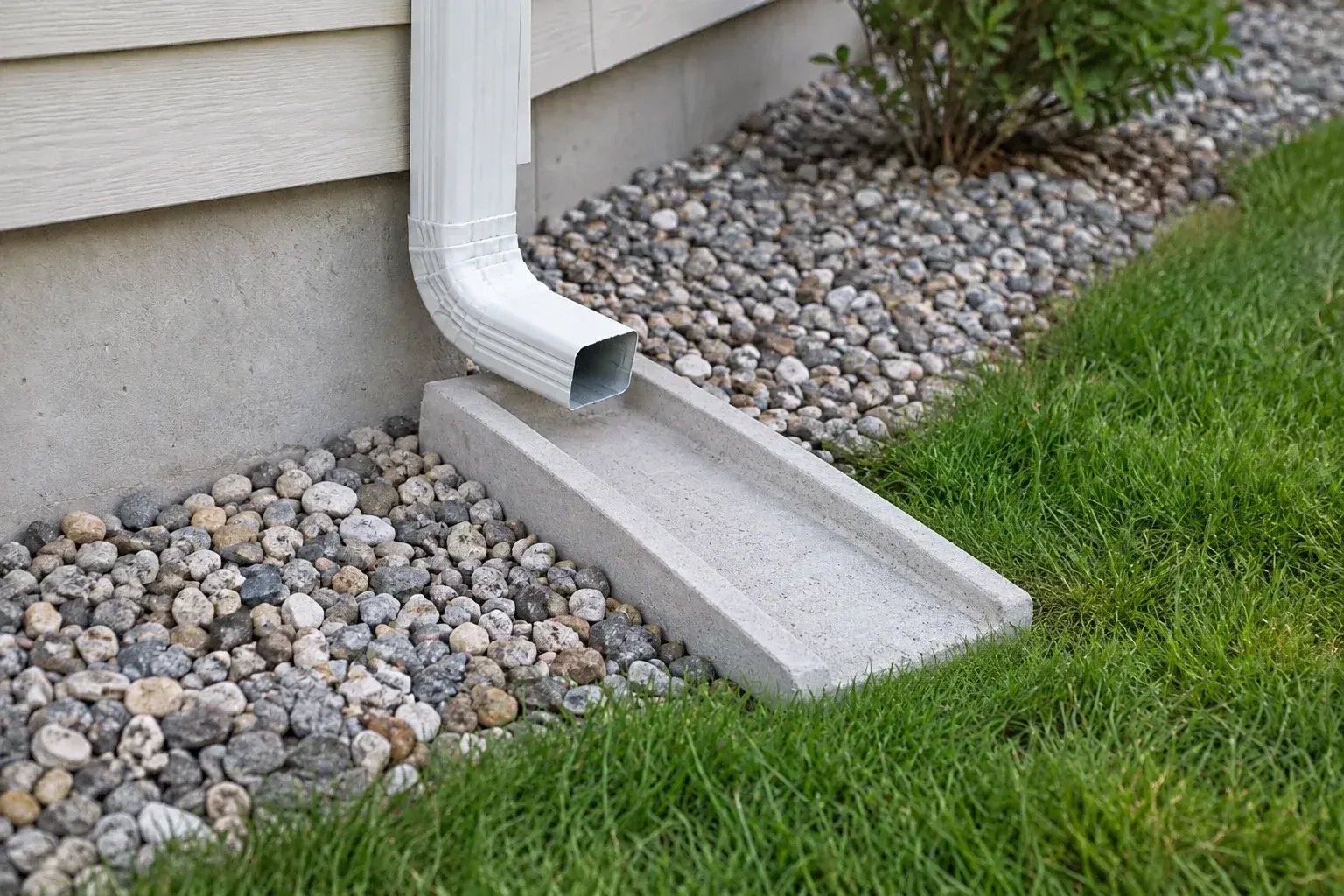
Ask questions that acknowledge the limits
Prepare questions that distinguish what is visible from what remains uncertain. Ask which observations are clear enough to discuss now, which need a closer look and what additional records would be useful. If a possible explanation is suggested, ask what evidence supports it and what alternatives remain open. Guidance on clarifying drainage assumptions can help you keep tentative explanations separate from established findings in your notes.
Keep questions tied to the work that would actually address each concern. Discussing surface drainage does not establish that a roof leak has been identified or that wet building materials have been assessed. Ask whether a concern falls within the proposed discussion and whether a separate trade or investigation may be needed. This prevents a useful conversation about water movement from being mistaken for a complete evaluation of every water-related issue.
Before finishing, ask what happens next and what, if anything, you should send. Clarify whether any summary will be provided and whether another conversation or visit would require separate arrangements. For a business property, identify the person authorized to receive information and make decisions. Do not treat an informal exchange as permission to begin work. Record any unresolved questions explicitly, especially where the available photographs, access or weather limited what could be discussed.
Keep the follow-up organized
Afterward, organize the timeline, selected photographs and notes in one folder. Separate your observations, the explanations discussed and the information still requested. Send a short follow-up that corrects misunderstandings and identifies missing attachments. If several people manage the property, use one shared version so maintenance staff, ownership and the person handling the conversation are not working from different accounts of the same event.
Effective preparation for Drainage service in Thornton does not require proving the cause beforehand. It requires a clear account of what happened and a practical way to share it. For remote conversations, prioritize connected photographs and reliable file delivery. For in-person visits, prioritize access and location references. In either format, confirm availability directly and leave unsupported conclusions open until the relevant evidence is available.
Frequently asked questions
Should I prepare different information for a remote conversation and an in-person visit?
Use the same timeline and property background for both. Remote preparation needs stronger visual context and clearly labeled photographs. An in-person visit also requires access arrangements, a meeting point and a safe route to the areas you want to discuss.
Can photographs establish what is happening inside a buried drain?
No. Photographs can document visible connections and surface conditions, but they do not establish a buried pipe's route, condition or capacity. Ask what additional information would be needed before drawing conclusions.
Does Kings Exteriors & Gutter Systems LLC offer both consultation formats?
Neither format is confirmed here. Ask the company directly whether it currently offers a suitable consultation format for your Thornton property and what information, access arrangements or charges would apply.